
What Is Outdoor Dining Furniture A Global Buyers Guide?
Outdoor Dining Furniture is no longer a seasonal purchase limited to patios and garden cafés. It has become a practical investment for hotels, restaurants, resorts, and private homes worldwide. Buyers now compare weather resistance, comfort, design life, maintenance, and shipping reliability before choosing a collection.
Richard Schultz, the American furniture designer behind the celebrated 1966 Collection, once described his goal simply: “I wanted to make furniture that could stay outside.” That idea still matters. Outdoor Dining Furniture must tolerate sun, rain, salt air, temperature changes, and daily movement. A powder-coated aluminum chair may suit a coastal restaurant, while teak can bring warmth to a residential terrace. Neither option is perfect. Coastal humidity can expose weak finishes, and even quality wood needs regular care.
Details reveal quality.
A serious global buyer should inspect frame joints, drainage holes, fabric performance, replacement parts, and packaging protection. Ask for material specifications and documented test results. Confirm whether cushions dry quickly after heavy rain. Check table stability on uneven paving. Small oversights become expensive problems.
Local climate and usage patterns should guide every decision. A busy café needs stackable chairs and easy-clean surfaces. A luxury resort may prioritize tactile comfort and visual consistency. Sustainability also requires careful thinking, not empty claims. Recyclable aluminum helps, but transport distance, repairability, and product lifespan matter too.
This guide examines those practical choices. It connects design appeal with proven performance, while recognizing an uncomfortable truth: attractive furniture can still fail when buyers ignore its environment.
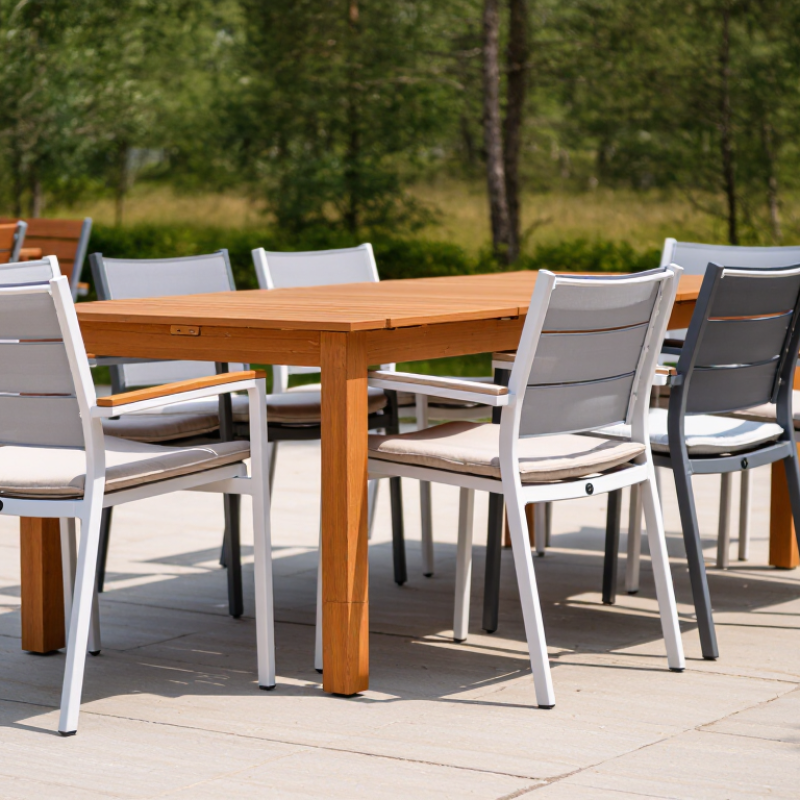
Definition and Scope of Outdoor Dining Furniture
Outdoor dining furniture refers to tables, chairs, benches, and related pieces designed for eating in open-air spaces. These spaces include patios, balconies, gardens, terraces, rooftops, and outdoor restaurant areas. Unlike lounge furniture, dining furniture supports meals, conversation, and regular table service. It normally provides a comfortable seat height, practical table clearance, and enough stability for plates and glassware.
Its scope is broad. Residential buyers may need a compact folding set for a small balcony. Hospitality buyers often require stackable chairs, large tables, and easy-clean surfaces for frequent service. Common materials include aluminum, steel, teak, treated wood, resin, and outdoor-grade composites. Each material responds differently to sunlight, rain, salt air, humidity, and temperature changes. No material is maintenance-free.
Function matters more than appearance alone. Buyers should examine frame strength, drainage, surface heat, cleaning needs, weight, storage space, and replacement parts. Chairs should support natural posture without blocking movement around the table. Tables need reliable level adjustment on uneven paving. Small details matter. In practical purchasing work, attractive finishes sometimes show stains quickly or become uncomfortable under strong sun. The boundary is not always clear, either. A bench used for dining may also serve as casual seating. This overlap makes product descriptions, dimensions, and care instructions essential for a dependable global purchase.
| Data Dimension | Definition or Specification | Typical Options or Data Range | Buyer Relevance | Verification Considerations |
|---|---|---|---|---|
| Product Definition | Furniture designed for eating, serving, or socializing in open-air or partially sheltered environments. | Dining tables, dining chairs, benches, bar-height tables, stools, and coordinated dining sets. | Clarifies whether a product belongs to the outdoor dining category rather than general patio seating. | Check intended-use statements, load ratings, weather-resistance claims, and installation instructions. |
| Primary Use Environment | The physical setting where the furniture is expected to operate. | Private gardens, balconies, terraces, rooftops, restaurants, cafés, hotels, resorts, and public hospitality areas. | Commercial locations usually require greater durability, easier maintenance, and higher replacement efficiency. | Confirm exposure to wind, rain, salt air, ultraviolet radiation, temperature changes, and cleaning chemicals. |
| Dining Table Height | The vertical distance from the floor to the upper surface of the table. | Standard dining: approximately 71–76 cm; counter height: approximately 86–91 cm; bar height: approximately 102–107 cm. | Height must match the seating type to provide comfortable legroom and eating posture. | Measure the finished tabletop height and compare it with the seat height of the selected chairs or stools. |
| Dining Chair Seat Height | The distance from the floor to the top of the compressed seat surface. | Standard dining chairs: approximately 43–48 cm; counter stools: approximately 61–66 cm; bar stools: approximately 71–76 cm. | Correct seat height helps maintain a practical relationship between the chair and table. | Review seat height under normal user weight, especially when cushions are included. |
| Tabletop Materials | Materials used for the horizontal dining surface. | Powder-coated metal, stainless steel, solid wood, engineered wood, ceramic, porcelain, stone, concrete, glass, and high-pressure laminate. | Material affects weight, appearance, heat tolerance, staining, maintenance, and expected service life. | Check thickness, edge treatment, surface finish, repairability, and resistance to moisture and ultraviolet exposure. |
| Frame Materials | Structural materials supporting the tabletop and seating surfaces. | Aluminum, galvanized steel, stainless steel, treated hardwood, engineered timber, and synthetic resin. | Frame material influences structural strength, corrosion risk, portability, and long-term stability. | Request information about alloy or steel grade, protective coating, weld quality, fasteners, and joints. |
| Material Weight Characteristics | The relative mass of the furniture and its components. | Aluminum and some resin products are generally lightweight; steel, stone, concrete, and thick hardwood products are generally heavier. | Light furniture is easier to move but may need anchoring in windy locations; heavier furniture can offer greater stability. | Review net weight, packaging weight, center of gravity, stacking capability, and anchoring provisions. |
| Weather Resistance | The ability to retain performance and appearance during outdoor exposure. | Resistance may include rain, humidity, ultraviolet radiation, frost, heat, wind, and coastal salt spray. | Outdoor suitability depends on the complete product system, not only on one material. | Ask for exposure limitations, test methods, warranty conditions, and recommended protective covers. |
| Corrosion Protection | Measures used to reduce oxidation or deterioration of metal components. | Powder coating, anodizing, galvanizing, stainless-steel construction, drainage design, and protective caps. | Important for humid, rainy, coastal, poolside, and high-salinity environments. | Inspect coating continuity, drainage holes, fastener material, cut edges, and contact points between dissimilar metals. |
| Ultraviolet Protection | The ability of materials, coatings, fabrics, and finishes to resist sunlight-related fading or degradation. | UV-stabilized polymers, exterior-grade coatings, solution-dyed outdoor fabrics, and UV-resistant sealants. | Helps preserve color, flexibility, surface integrity, and structural performance in sunny climates. | Look for stated UV exposure performance, colorfastness information, and care requirements. |
| Seating Capacity | The number of users a table is designed to accommodate comfortably. | Two-person tables; four-person tables; six-person tables; eight-person tables; larger modular arrangements. | Capacity affects floor planning, table spacing, service flow, and purchasing quantity. | Allow practical elbow room and verify the manufacturer’s recommended seating layout rather than relying only on tabletop length. |
| Space Planning | The area required for furniture, users, circulation, and service access. | A dining table requires additional clearance for chair pull-out, movement, cleaning, and accessibility. | Accurate planning reduces congestion in balconies, patios, terraces, and hospitality venues. | Measure the usable floor area and account for doors, railings, planters, umbrellas, service paths, and emergency routes. |
| Structural Load | The maximum weight the table, chair, bench, or stool is designed to support under stated conditions. | Load limits vary by product design, material, geometry, and applicable testing method. | Supports safe use and helps buyers compare products intended for residential and commercial environments. | Request static-load ratings, test conditions, user instructions, and separate limits for seats, backs, and tabletops. |
| Safety and Stability | The resistance of furniture to tipping, sliding, collapse, sharp edges, entrapment, and other foreseeable hazards. | Wide bases, adjustable feet, non-slip glides, rounded edges, secure joints, and optional anchoring systems. | Particularly important in windy areas, public venues, family spaces, and uneven outdoor locations. | Check stability testing, tip resistance, floor-leveling features, fastener security, and local safety requirements. |
| Maintenance Requirement | The routine cleaning, inspection, adjustment, and protection needed to maintain performance. | Routine cleaning with mild soap and water; periodic tightening; prompt removal of stains; seasonal covering or storage. | Lower maintenance can reduce labor, downtime, and ownership cost over the product life. | Follow material-specific instructions and confirm whether pressure washing, abrasive cleaners, or solvents are prohibited. |
| Cushion and Upholstery Scope | Textile, foam, and cushion components used with outdoor dining chairs or benches. | Quick-drying foam, breathable covers, solution-dyed acrylic or polyester fabrics, and removable washable covers. | Influences comfort, drying time, mildew risk, color retention, and storage needs. | Check water repellency, seam construction, zipper corrosion resistance, foam drainage, and cleaning instructions. |
| Climate Suitability | The expected performance of the furniture under regional climatic conditions. | Dry and sunny; humid and rainy; cold and frost-prone; hot and arid; coastal and saline; seasonal climates. | A product suitable for one climate may require additional protection in another. | Match material specifications and care procedures to local temperature, humidity, rainfall, wind, and salinity levels. |
| Sustainability Factors | Environmental attributes related to materials, manufacturing, service life, repair, and end-of-life handling. | Recycled content, recyclable materials, replaceable components, durable finishes, certified timber, and reduced packaging. | May support environmental procurement policies and reduce replacement frequency. | Request evidence for recycled content, timber sourcing, packaging materials, repair options, and recycling pathways. |
| Assembly and Logistics | The processes required to deliver, assemble, move, store, and install the furniture. | Fully assembled, partially assembled, flat-packed, stackable, foldable, modular, or knock-down construction. | Impacts delivery cost, storage volume, installation labor, and replacement speed. | Confirm carton dimensions, assembly tools, spare parts, pallet configuration, stacking limits, and installation time. |
| Documentation | Technical and commercial information supplied with the product. | Specification sheets, assembly instructions, care guides, safety information, warranty terms, and material declarations. | Complete documentation enables consistent purchasing, installation, maintenance, and after-sales management. | Ensure all claims are supported by current documents and that instructions are available in the required market language. |
Related Posts
-
How to Choose Outdoor Dining Furniture for Global Buyers?
-
2025 Trends in Outdoor Living: How to Choose the Perfect Outdoor Dining Set for Your Space
-
Best China Outdoor Dining Furniture Manufacturers
-
Navigating Import and Export Certifications for Best Outdoor Chairs and How to Choose Compliant Products
-

How to Choose the Perfect Patio Set for Your Outdoor Oasis
-
2025 Trends in Best Outdoor Dining Furniture for Global Buyers