
Best China Outdoor Dining Furniture Manufacturers
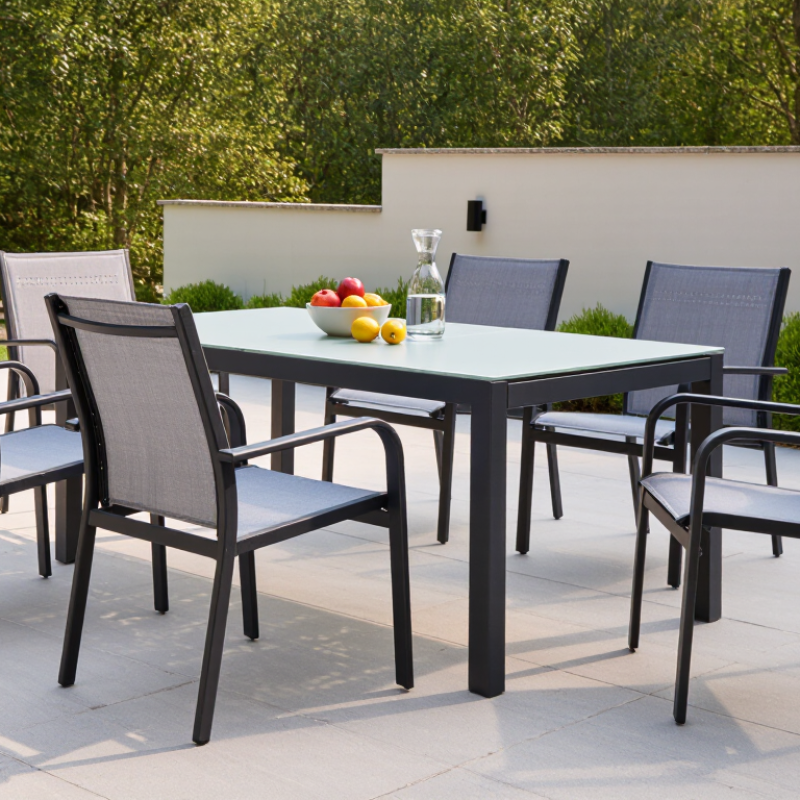
Choosing the Best China Outdoor Dining Furniture Manufacturers requires more than comparing catalog prices. Buyers should examine material quality, production experience, export records, and after-sales support. The right supplier can turn a patio concept into durable, comfortable, and commercially successful Outdoor Dining Furniture.
Richard Schultz, a respected outdoor furniture designer, once said, “Outdoor furniture should be as comfortable and durable as indoor furniture.” That principle remains practical today. A strong manufacturer should offer tested aluminum frames, weather-resistant finishes, quick-drying cushions, and stable ceramic or tempered-glass tabletops. Ask for samples. Touch the welds. Check whether powder coating covers hidden corners. Small details often reveal factory discipline.
China has many capable manufacturers, but quality levels vary widely. Reliable suppliers usually provide clear specifications, material certificates, factory photographs, and realistic production schedules. They should explain corrosion testing, fabric performance, packaging methods, and replacement-part policies without vague promises. Independent inspections can confirm dimensions, color consistency, carton strength, and assembly safety before shipment.
Experience also matters. A factory serving hotels may understand heavy-use furniture better than one focused only on seasonal retail orders. Yet even experienced suppliers can miss details. I have seen attractive chairs fail because their drainage holes were too small. That is an uncomfortable lesson. Buyers should define loading requirements, climate conditions, stacking needs, and maintenance expectations early. The best partnership is not built on the lowest quotation. It depends on transparent communication, repeatable workmanship, and the willingness to improve one imperfect prototype before mass production.
Definition and Scope of China Outdoor Dining Furniture Manufacturing
Best China Outdoor Dining Furniture Manufacturers
China outdoor dining furniture manufacturing covers the organized production of tables, chairs, benches, and related pieces for exterior dining areas. It serves restaurants, hotels, resorts, residential projects, and commercial terraces. The scope includes standard collections, contract orders, and custom designs. Materials may include aluminum, stainless steel, treated wood, synthetic rattan, compact surfaces, and outdoor textiles.
Experienced manufacturers manage more than assembly. They review drawings, select weather-resistant materials, weld frames, apply protective finishes, and test load performance. They also inspect dimensions, surface quality, drainage details, and hardware durability. A practical factory visit should include sample checks, production records, and packaging reviews. Small details matter. Poorly sealed joints can collect water.
The manufacturing scope often extends to color matching, logo-free packaging, replacement parts, and shipment preparation. Reliable suppliers should explain tolerances, care requirements, lead times, and quality checkpoints clearly. Outdoor performance depends on climate, usage, maintenance, and installation. A chair suitable for a covered patio may fail on an exposed seaside terrace. No factory is perfect. Even a polished sample can hide production inconsistencies, so buyers should request repeated samples and inspect finished batches before approval.
| Scope Dimension | Definition or Typical Data | Manufacturing Relevance | Common Evaluation Criteria |
|---|---|---|---|
| Industry Definition | Outdoor dining furniture manufacturing covers the design, processing, assembly, finishing, inspection, packaging, and export of furniture intended for open-air dining areas. | Defines whether a supplier produces complete dining products rather than only raw materials, components, or indoor furniture. | Dedicated production capability, product documentation, quality-control procedures, and outdoor-use specifications. |
| Core Product Categories | Dining tables, dining chairs, bar-height tables, counter-height stools, benches, outdoor dining sets, and matching cushions or protective covers. | Shows the breadth of a manufacturer’s outdoor dining portfolio and its ability to support coordinated projects. | Product range, modular compatibility, size options, replacement parts, and customization capacity. |
| Common Frame Materials | Aluminum, galvanized or stainless steel, powder-coated steel, teak, other hardwoods, and engineered outdoor-grade materials. | Frame material affects corrosion resistance, weight, structural strength, maintenance, and service life. | Material grade, wall thickness, weld quality, surface preparation, coating adhesion, and moisture resistance. |
| Common Surface Materials | Tempered glass, ceramic or sintered tops, solid wood, high-pressure laminate, stone, aluminum slats, and synthetic woven surfaces. | Surface selection determines resistance to heat, stains, impact, ultraviolet exposure, and repeated cleaning. | Outdoor suitability, edge treatment, cleanability, color stability, and replacement availability. |
| Synthetic Woven Materials | Outdoor dining chairs may use high-density polyethylene (HDPE) wicker, polypropylene rope, textilene, or other weather-resistant woven materials. | These materials provide design flexibility while requiring resistance to sunlight, humidity, and temperature changes. | Fiber consistency, tensile strength, UV stabilization, weaving quality, and resistance to mildew. |
| Typical Dining Table Heights | Standard dining tables are commonly about 710–760 mm high; counter-height tables are commonly about 860–950 mm; bar-height tables are commonly about 1,020–1,100 mm. | Height determines chair or stool compatibility and influences comfort in hospitality and residential applications. | Dimensional accuracy, leg stability, clearance under the tabletop, and compatibility with seating products. |
| Typical Seating Heights | Dining chair seats are commonly about 430–480 mm high; counter stools are commonly about 610–710 mm; bar stools are commonly about 710–810 mm. | Correct seat height supports ergonomic dining and prevents mismatches between tables and seating. | Seat height consistency, footrest position, back support, load rating, and comfort testing. |
| Outdoor Protection Requirements | Products should be designed for exposure to sunlight, rain, humidity, temperature variation, dust, food spills, and regular cleaning. | Outdoor furniture requires more durable construction and finishing than comparable indoor furniture. | Corrosion resistance, UV resistance, drainage design, fastener protection, coating durability, and maintenance instructions. |
| Metal Finishing Processes | Common processes include degreasing, chemical pretreatment, powder coating, anodizing, galvanizing, and passivation for applicable metals. | Surface treatment protects metal frames from oxidation, corrosion, abrasion, and color deterioration. | Coating thickness, pretreatment quality, adhesion, surface uniformity, and resistance to humidity or salt exposure. |
| Wood Treatment | Outdoor wood products may use kiln-dried timber, moisture-control processes, exterior oils, water-based coatings, sealants, and protective end-grain treatment. | Wood treatment helps control moisture movement, cracking, discoloration, and biological deterioration. | Wood species, moisture content, joint design, coating system, responsible sourcing documentation, and maintenance guidance. |
| Cushion and Upholstery Scope | Outdoor cushions commonly include quick-dry or open-cell foam, solution-dyed acrylic or polyester fabrics, and removable washable covers. | Cushion construction affects drying speed, color retention, comfort, and resistance to mold and mildew. | Fabric lightfastness, seam quality, zipper performance, foam drainage, washability, and replacement-cover options. |
| Structural Performance | Dining furniture should withstand repeated seating, table loading, movement, stacking where applicable, and normal outdoor handling. | Structural performance reduces safety risks, product returns, and premature failures in residential and commercial settings. | Static load testing, fatigue testing, joint strength, wobble control, fastener security, and declared load limits. |
| Commercial Applications | Typical applications include restaurants, cafés, hotels, resorts, outdoor event venues, apartment communities, and public terraces. | Commercial projects generally require higher durability, coordinated quantities, replacement support, and consistent batch quality. | Contract-grade construction, project capacity, delivery planning, spare parts, warranty terms, and installation support. |
| Residential Applications | Typical applications include balconies, patios, gardens, poolside areas, terraces, rooftop spaces, and private outdoor dining areas. | Residential products often emphasize appearance, compact storage, comfort, and easy maintenance. | Folding or stackable design, space efficiency, weather protection, assembly simplicity, and care instructions. |
| Space-Saving Features | Common features include stacking chairs, folding tables, nesting tables, detachable legs, extendable tabletops, and modular seating. | Space-saving designs reduce storage requirements and simplify seasonal operation or venue reconfiguration. | Stacking stability, hinge safety, locking mechanisms, repeated-use durability, and storage dimensions. |
| Customization Scope | Customization may include dimensions, frame colors, tabletop materials, fabrics, cushion thickness, packaging, hardware, and product combinations. | Customization enables products to meet project design, ergonomic, branding-free specification, and regional requirements. | Sample approval process, engineering drawings, prototype accuracy, minimum order quantity, and change-control procedures. |
| Quality Inspection Points | Typical inspections cover dimensions, appearance, welds, coating, fasteners, stability, load performance, fabric defects, packaging, and accessories. | Multi-stage inspection helps identify defects before shipment and supports consistent production batches. | Incoming-material inspection, in-process checks, final inspection, inspection records, and corrective-action procedures. |
| Packaging Considerations | Outdoor furniture may use corrugated cartons, molded protection, foam or paper cushioning, palletization, moisture barriers, and assembly labeling. | Appropriate packaging reduces scratches, dents, moisture damage, and transit-related deformation. | Drop protection, carton strength, export marking, packaging efficiency, recyclable materials, and container utilization. |
| Export Documentation | International shipments commonly require commercial invoices, packing lists, transport documents, product descriptions, and origin or compliance documents where applicable. | Accurate documentation supports customs clearance and reduces delays during cross-border delivery. | Document accuracy, harmonized tariff classification support, shipment traceability, and destination-market requirements. |
| Sustainability Factors | Relevant factors include recyclable aluminum, recycled plastics, responsibly sourced wood, durable coatings, repairable components, and reduced packaging. | Longer product life and recyclable materials can reduce environmental impact over the product lifecycle. | Material traceability, recycled content evidence, responsible forestry documentation, repair options, and end-of-life considerations. |
| Manufacturer Selection Scope | A suitable manufacturer is evaluated by product fit, outdoor-material expertise, production consistency, testing capability, customization support, packaging, lead-time control, and after-sales service. | A balanced assessment is more reliable than judging suppliers only by price, catalog size, or appearance. | Verified samples, factory capability, documented quality systems, transparent quotations, realistic lead times, and clear warranty conditions. |
Related Posts
-
Outdoor Furniture Trends for 2026 What You Need to Know?
-
What Is the Best Outdoor Furniture Set in 2026?
-
Top 10 Outdoor Furniture Set Suppliers for Global Buyers
-
What Is the Best Type of Outdoor Patio Furniture?
-

7 Essential Advantages of Choosing Outdoor Dining Furniture for Your Patio
-
How to Choose the Perfect Outdoor Lounge Furniture for Your Backyard Retreat