How to Choose Outdoor Dining Furniture for Global Buyers?

Global buyers are rethinking outdoor spaces as extensions of hotels, restaurants, cafés, and homes. Outdoor Dining Furniture now faces higher expectations for comfort, durability, and visual consistency. A table must survive sunlight, rain, salt air, and repeated cleaning. It must also feel inviting at first sight.

Market data confirms this shift. Grand View Research valued the global outdoor furniture market at approximately USD 18.43 billion in 2023. Its report projects steady growth through 2030, supported by hospitality investment and residential outdoor living. Allied Market Research also forecasts strong expansion, estimating the outdoor furniture market could reach about USD 33.8 billion by 2031. These figures cover broader categories, not dining furniture alone. That limitation matters. No single report perfectly captures regional buying behavior.

“Outdoor rooms are no longer an afterthought,” says Richard Frinier, an internationally recognized outdoor furniture designer. His observation explains why product selection requires more than attractive photographs. Global buyers must compare frame materials, upholstery performance, replacement parts, packaging, and supplier reliability. Aluminum may suit coastal projects, while treated hardwood offers a warmer appearance. Neither choice is automatically better. A humid patio, a windy rooftop, and a shaded courtyard demand different specifications.

This guide examines practical criteria for selecting Outdoor Dining Furniture across markets. It considers climate exposure, seating comfort, commercial warranties, sustainability claims, and shipping risks. Buyers should question vague terms such as “weatherproof.” Ask for test standards and maintenance instructions. Small details often decide long-term value. And some purchasing assumptions deserve reconsideration. Lower prices can hide shorter service life, while premium finishes may not suit every climate.
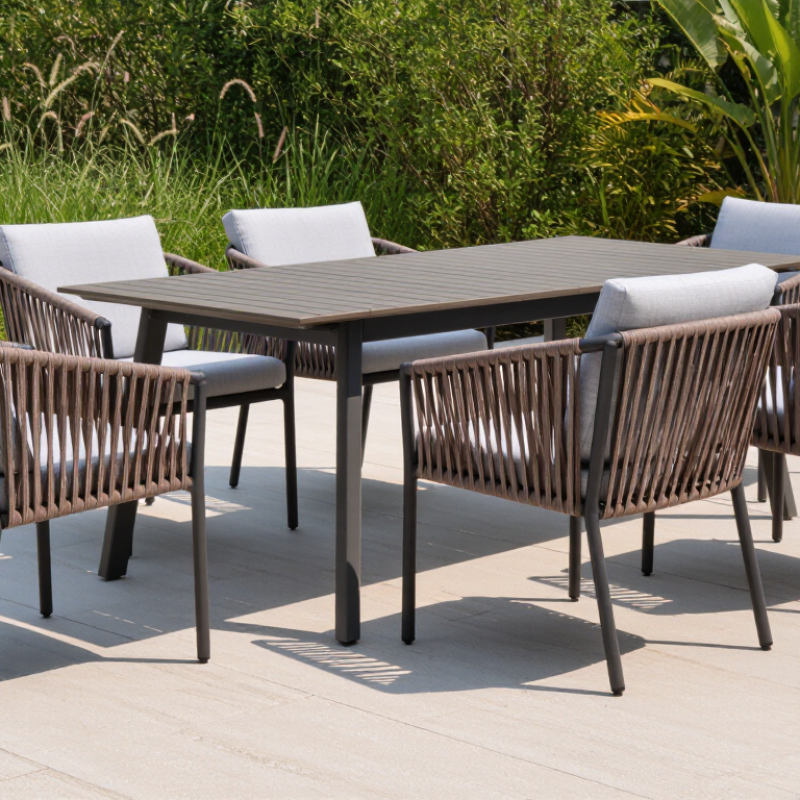
How to Choose Outdoor Dining Furniture for Global Buyers?

Define Use Cases by Climate, UV Exposure, Rainfall, and Wind Conditions

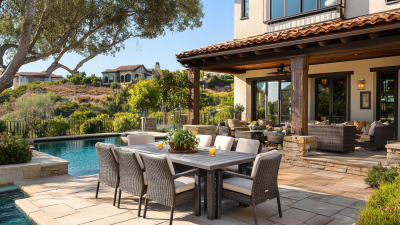
Outdoor dining furniture should be selected around real weather conditions, not attractive showroom images. Start by defining the location’s climate, seasonal temperatures, and daily use pattern. A coastal restaurant faces salt air, strong sunlight, and sudden wind. A mountain café may need freeze-resistant frames and furniture that stores easily. Hot regions also require breathable cushions and heat-resistant surfaces. Measure the outdoor area during busy service hours. Shade can change comfort dramatically.

UV exposure deserves careful attention. Strong sunlight can fade fabrics, dry plastics, and weaken some coatings. Choose solution-dyed outdoor textiles, UV-stable finishes, and surfaces that do not become dangerously hot. Check the local UV index instead of relying on general climate labels. Rainfall matters just as much. Slatted tabletops, open-weave seats, and quick-draining cushions reduce standing water. However, fast drainage does not replace proper storage. Cushions left outside after heavy rain may still develop odors or mildew.

Wind conditions require practical testing. Record prevailing wind direction, gust frequency, and nearby exposure from rooftops or open streets. Lightweight chairs may need stackable designs, linking options, or secure storage. Tables need stable bases and sufficient weight, but excessive weight can burden staff. Ask suppliers for load data, corrosion information, and maintenance instructions. Independent testing is useful, though no test perfectly copies a busy terrace. I have seen durable furniture fail because drainage was ignored. Reassess the choice after one wet season.

Compare Aluminum, Teak, Steel, and HDPE by Durability and Maintenance Needs

How to Choose Outdoor Dining Furniture for Global Buyers?

Material choice affects service life, cleaning labor, and replacement costs. Aluminum resists rust and remains relatively light, making relocation easier. However, thin frames can dent, and low-quality coatings may fade under intense sunlight. Steel offers strong load performance, but exposed scratches can begin corrosion quickly. The AMPP IMPACT study estimates corrosion costs at about 3.1% of global GDP, showing why drainage and coating quality matter.

Teak performs well in humid outdoor settings. The USDA Forest Products Laboratory’s Wood Handbook, 2021, links teak’s natural extractives and low permeability with strong decay resistance. It still needs regular cleaning, especially near food service areas.

HDPE does not rot, splinter, or absorb much water. PlasticsEurope’s Plastics—the Facts 2023 report notes that UV stabilizers and material formulation strongly influence plastic performance. Recycled content can vary. That trade-off deserves review.

Tips: Ask suppliers for salt-spray, UV, and load-test results. Check frame joints, not just surface appearance. Use mild soap, soft brushes, and prompt spill removal. Avoid harsh abrasives on powder-coated aluminum. Inspect steel after every wet season. Teak may look better after weathering, but some buyers dislike its silver-grey color. HDPE cleans easily, yet dark colors can feel hot in direct sun. Real sites are messier. Test one sample outdoors for a full season before ordering globally.

Select Seating Dimensions Using the 18–20 Inch Standard Seat Height

For global outdoor dining projects, begin with an 18–20 inch seat height. This range suits many adults and supports easier table access. It also matches common hospitality practice. However, it is a starting point, not a universal rule.

The ANSUR II anthropometric survey shows meaningful differences in lower-leg length across adult populations. That variation matters when buyers serve international guests. Test the chair with the planned tabletop, cushion, and floor surface. A thick cushion can reduce effective height by one or two inches. After rain, woven seats may also flex differently.

18–20 inch
seat height

BIFMA X5.4-2020 evaluates seating strength, stability, and durability. It does not impose one universal dining-seat height. Therefore, buyers should verify comfort through physical samples, not rely on catalog dimensions alone. For a 29–30 inch dining table, an 18–20 inch seat usually leaves practical leg clearance. Keep roughly 9–12 inches between the compressed seat and tabletop underside.

Check the details.

A 19-inch frame may feel like 17 inches after compression. Taller users may prefer the upper end, while children and shorter guests may need lower seating. Record seat height under load, not only without a user. This small testing step prevents costly revisions. I have found that comfort assumptions often fail when cushions, table aprons, and uneven patios are considered together. Data guides the decision, but real-body testing exposes the uncomfortable gaps.

Verify Commercial Safety, Fire, UV, and Load-Testing Requirements

How to Choose Outdoor Dining Furniture for Global Buyers?

Commercial outdoor furniture must pass more than a showroom inspection. Ask suppliers for current test reports, laboratory details, sample identification, and testing dates. Requirements vary by country, venue, material, and fire authority.

NFPA’s Fire Loss in the United States During 2023 estimated 1,388,500 fires and USD 22.2 billion in property damage. This broad figure is not furniture-specific, but it shows why flame behavior cannot be treated casually.

For upholstered chairs, check applicable ignition and flame-spread tests, such as EN 1021-1, EN 1021-2, or local commercial requirements. Plastic components may need a separate flammability assessment.

Do not assume a residential certificate satisfies hospitality use. It may not.

For strength, request commercial seating tests under standards such as ANSI/BIFMA X5.4 or EN 581-2. Review static load, repeated-use, impact, and stability results. A single weight number is insufficient for busy restaurants, where customers lean, twist, and move chairs unevenly.

UV performance also needs evidence, not attractive claims.

Ask whether fabrics, coatings, and polymers were evaluated through methods such as ASTM G154, ASTM G155, or ISO 4892-3. Compare exposure cycles, irradiance, color change, cracking, and tensile retention.

Sunlight differs sharply between coastal, tropical, and high-altitude locations. A certificate is not a magic shield. Salt spray, heat, cleaning chemicals, and poor drainage can shorten service life.

Buyers should inspect one production sample, record its batch, and repeat critical checks before large-scale purchasing.

Calculate Total Landed Cost, Packaging, MOQ, and 5–10% Spare Inventory

Global buyers should price outdoor dining furniture beyond the factory quotation. Build a landed-cost sheet for every shipment. Include product value, inland transport, export documents, ocean freight, insurance, duties, taxes, and destination handling fees. Incoterms 2020 clarifies cost and risk responsibilities between buyer and seller. The World Bank’s 2023 Logistics Performance Index gives international shipments an average score of only 3.0 out of 5 across surveyed economies. Transit is never perfectly predictable.

Packaging deserves a separate calculation. Record carton dimensions, gross weight, pallet count, and container loading efficiency. Request drop-test evidence and moisture protection for metal frames, cushions, and ceramic surfaces. The OECD’s Global Plastics Outlook reports that packaging creates about 40% of global plastic waste. Better packaging should reduce damage, not simply add plastic. Compare the packaging cost with potential replacement freight and customer-service labor.

MOQ should match realistic demand, storage capacity, and cash flow. A 500-piece MOQ may look efficient, but it can create slow-moving stock after one season. For a 500-piece order, a 5% spare quantity means 25 additional units. Use closer to 10% for fragile components, mixed-color orders, or routes with frequent handling. Seven percent is a working assumption, not a law. Review damage records after each shipment and adjust the rate. A spreadsheet can still lie. Include a freight sensitivity test, because a small rate change can erase the planned margin.

No products in the cart.