Why Choose Stainless Steel Food Containers?
Stainless Steel Food Containers are popular because they offer a durable, reusable way to pack everyday meals. Their appeal is easy to see: a solid container can hold sliced fruit, pasta, or a sandwich without absorbing food odors as readily as some plastic options. A well-fitting lid also helps prevent spills, though no lid should be assumed leakproof without checking its design. Small details matter.
For busy mornings, a container that rinses clean and stacks neatly can make meal preparation feel less demanding. Stainless steel is generally resistant to rust and corrosion, but quality, construction, and care still matter. Look for clearly stated food-contact materials, smooth seams, and care instructions from the maker. Some containers include silicone seals or plastic lids, so the whole product may not be stainless steel. That distinction is easy to miss.
There are trade-offs. Stainless steel containers are usually not suitable for microwave use, and they can feel heavy when filled with a full lunch. A basic, uninsulated model may not keep food hot or cold for long. Not every meal fits. Soups and saucy dishes need a dependable seal, while acidic foods should be stored according to the manufacturer’s guidance. These containers can be a practical choice, but they are not automatically the best choice for every routine. Consider what you pack, how you clean it, and whether carrying extra weight is worth the durability. A little reflection before buying can prevent an attractive container from becoming unused cupboard clutter.
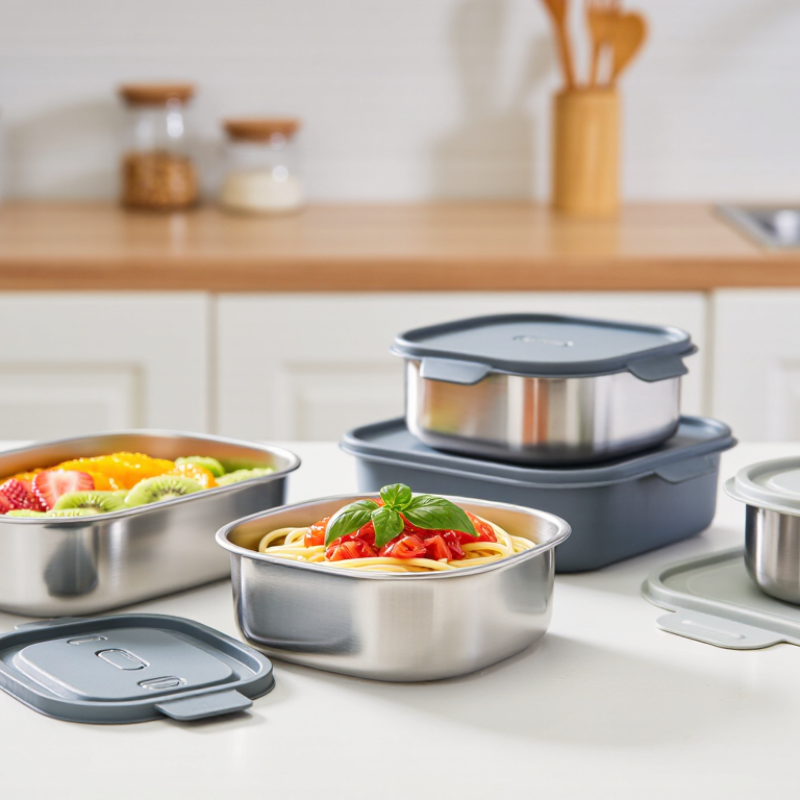
What Stainless Steel Food Containers Are Made Of
Stainless steel food containers are not made from one universal recipe. Many use austenitic steel, often Type 304, while others use different grades. The Nickel Institute’s technical publication Stainless Steel: The Role of Nickel describes Type 304 as typically containing about 18% chromium and 8% nickel. That familiar “18/8” shorthand describes the alloy, not a coating. Chromium helps form a thin passive surface that resists corrosion. That matters. It can help the container withstand moisture and everyday food acids, but it does not make steel stain-proof.
Some containers use Type 316, which includes molybdenum for increased corrosion resistance. Still, the grade alone does not tell the whole story. Wall thickness, weld quality, and finishing matter too. Look inside: smooth seams and rounded corners are easier to clean than creases that can hold sauce. Not every part. A lid may use another material, such as silicone or polypropylene, so check its specifications separately. Even a steel body can be poorly finished, and prolonged contact with acidic leftovers may leave marks. It is a small detail, but worth considering. Material claims are more useful when they identify the steel grade and provide food-contact documentation, rather than relying on “stainless” alone.
How Their Material Properties Support Food Storage
Why Choose Stainless Steel Food Containers?
How Their Material Properties Support Food Storage
Stainless steel suits food storage because its chromium-rich surface resists corrosion and tolerates repeated washing. The International Stainless Steel Forum’s food-industry guidance highlights these qualities for equipment exposed to moisture and cleaning. A smooth, intact surface is also easier to clean than scratched plastic, though it is not self-sanitizing. It still needs proper washing.
Temperature matters more than the container material. USDA Food Safety and Inspection Service guidance recommends refrigerating leftovers within two hours and using them within three to four days. Keep the refrigerator at 40°F (4°C) or below. A steel container can chill food safely, but deep, tightly packed portions may cool slowly. That detail is easy to miss.
Tips: Divide soup into shallow portions, dry the container after washing, and check for dents or damaged seams. Stainless steel is durable, but it may dent, and acidic foods can sometimes leave marks or metallic notes if the surface is compromised. For longer storage, label the date. A sturdy container helps; it cannot replace careful handling.
Food Safety and Compatibility Considerations
Food safety starts with the contact surface, not the label alone. The FDA Food Code 2022 calls for food-contact surfaces that are smooth, durable, and corrosion-resistant. A deep scratch or pitted seam can make cleaning harder. Small details count.
Nickel may matter for sensitive users. EFSA’s 2020 assessment set a tolerable daily intake of 13 micrograms per kilogram of body weight. A 2013 study in the Journal of Agricultural and Food Chemistry found that cooking acidic tomato sauce in new stainless-steel cookware increased nickel and chromium release; release declined with repeated use. This was cookware research, not a test of every food container. Still, it’s a useful caution. “Stainless” is not a guarantee.
For tomato, citrus, vinegar, or salty leftovers, check that the container is undamaged and its food-contact grade is documented. Avoid prolonged storage when the alloy is unknown, and follow the maker’s cleaning guidance. If rust, a metallic taste, or a deep pit appears, choose another container. I’d be cautious here.
Common Uses at Home, Work, and on the Go
At home,stainless Steel Food Containers are useful for leftovers, chopped vegetables, and packed lunches. A shallow container cools food more evenly in the refrigerator than a deep, crowded one. Dry staples such as nuts or crackers also store well when the lid fits securely.Small detail, big difference. Steel is durable, but it can dent if dropped, and it is not suitable for microwave heating.
At work, a wide container makes lunch easier to pack and clean after a busy day. Separate compartments can keep sliced fruit away from sandwiches, though they may take up more bag space. For commuting or errands, a compact container can hold snacks without adding much weight. Not every lid seals tightly, so check the closure before packing soups or sauces. On a hike or long drive, an insulated bag is still needed to keep perishable food cold; steel alone does not control temperature. Rinse containers soon after meals, especially after storing tomato-based or salty foods. A little care helps, though it is easy to forget when the day gets hectic.