What Are the Top Outdoor Furniture Sets for 2026?

Choosing an Outdoor Furniture Set for 2026 means balancing comfort, durability, and the space you actually have. The most appealing set is not always the most practical. A wide sectional can look inviting online, then crowd a narrow balcony. Measure your patio before comparing styles, and leave room to pull out chairs. Small details matter.

This guide explores what makes outdoor sets worth considering, from dining groups to lounge arrangements. We’ll look at frame materials, cushion fabrics, seating capacity, storage, and care requirements. A powder-coated metal frame may suit a modern patio, while woven finishes can soften a plain deck. Still, material labels alone cannot promise years of use. Check construction details, warranty terms, and care instructions. Sit on a display model if possible; comfort is difficult to judge from photographs.

There is no single best set for every household. Weather, sunlight, budgets, and everyday habits all change the answer. Some shoppers need a sturdy dining table for family meals; others want two chairs and a quiet place for coffee. This ranking should help narrow the choices, not replace careful measuring or hands-on testing. A little uncertainty is useful. It keeps the decision honest.
What Are the Top Outdoor Furniture Sets for 2026?

2026 Market Baseline: Grand View Research Projects 5.0% CAGR Through 2030

Grand View Research estimates that the global outdoor furniture market was worth about US$50.9 billion in 2023, with a projected 5.0% compound annual growth rate from 2024 to 2030. That growth points to steady demand, not a guaranteed boom. For 2026 shoppers, a “top” set should balance weather resistance, comfort, repairability, and available space. A powder-coated aluminum frame can suit damp patios; dense cushions with removable covers make seasonal cleaning easier. Check the joints. A large dining set may look inviting online, then crowd a narrow balcony.

Market estimates vary. Fortune Business Insights valued the market at US$52.08 billion in 2023 and forecasts US$78.27 billion by 2032, a 4.7% CAGR. Different forecast periods and research methods can produce different totals, so treat these figures as direction, not a precise sales prediction. That distinction matters when comparing 2026 options. Look for sturdy fasteners, replaceable cushion covers, and clear care instructions before paying extra for appearance alone. Measure the full footprint, including chair movement. A compact four-seat set may serve everyday meals better than a larger arrangement used only on sunny weekends. Top depends on the space.

Selection Criteria: Seating Capacity, Frame Material, Fabric, and Warranty

Choose an outdoor set for the way you actually use the space. Grand View Research valued the global outdoor furniture market at US$52.89 billion in 2023, showing how many options buyers face. That figure measures sales, not durability. Still useful context.

Count regular diners, then allow room for chairs to slide back without hitting a wall. A four-seat set may suit a narrow balcony; six seats need generous clearance. For frames, powder-coated aluminum is light and easier to move. Steel feels substantial, but inspect its protective finish for chips. Teak can weather to a silvery tone, though maintaining its original color takes effort. No material is maintenance-free.

Fabric deserves a closer look. Ask for test details on UV exposure, water resistance, and colorfastness; vague “all-weather” claims reveal little. ASTM G154 describes accelerated UV and moisture exposure testing, but lab cycles cannot reproduce every climate. Not a perfect forecast. Check whether the warranty covers the frame, fabric, and cushions separately. Read exclusions for fading, mildew, and neglected care. A long warranty sounds reassuring, yet its fine print may matter more than its headline term.

Top Set Types: Dining, Lounge, Modular, and Compact Bistro Designs

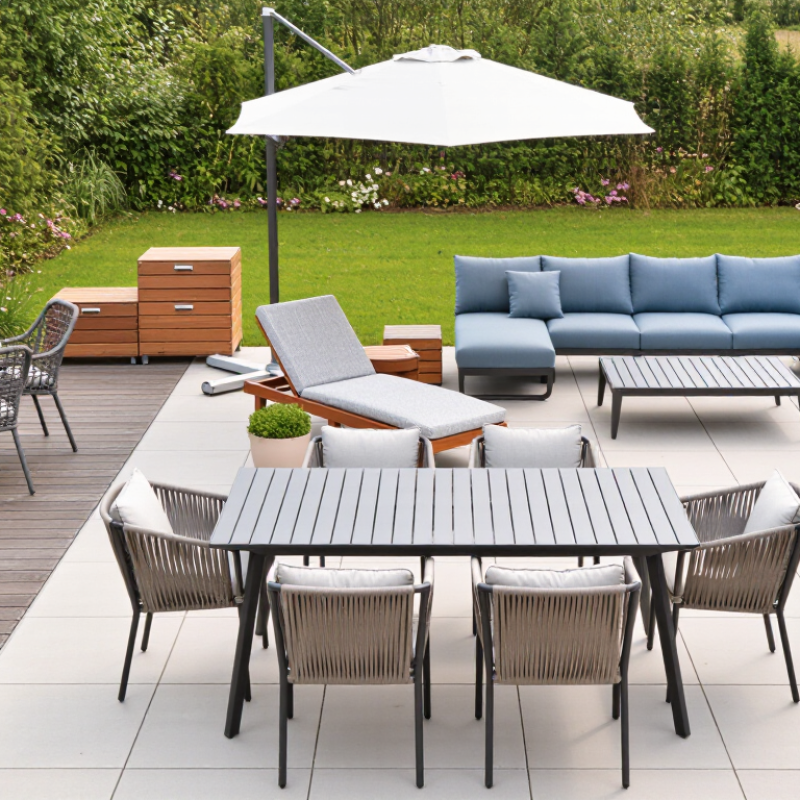
Outdoor furniture works best when its layout matches how people actually use the space. A dining set suits regular meals, shared projects, or long afternoons around a table. Measure the area with chairs pulled out, not tucked in. Otherwise, a comfortable set can leave too little room to walk. Check table height, seat depth, and whether cushions can be stored indoors during wet weather.

Lounge sets favor slower use: reading, conversation, and an occasional nap. Deep seats feel inviting, but they can be awkward for guests who prefer firmer support. Modular designs offer more flexibility, with sections that can form a corner sofa or separate seats. That adaptability has a catch. Pieces may shift on smooth patios, and rearranging them often takes more effort than product photos suggest. Look for sturdy connectors and washable covers.

Compact bistro sets make sense on balconies, narrow decks, and small courtyards. Two chairs and a café table can leave space for plants or a clear walkway. Keep it simple. Foldable chairs are useful when storage is tight, though lightweight frames may wobble on uneven paving. Before choosing, measure doorways and storage spots too. A set that fits the patio but cannot pass through the doorway is a frustrating surprise.

Durability Checks: ASTM G154 UV Exposure and Corrosion-Resistance Testing

For outdoor furniture, durability claims deserve a closer look than a polished product photo. ASTM G154 exposes materials to fluorescent ultraviolet light and moisture under controlled conditions. It does not prescribe one universal pass score or convert test hours into years outdoors. Ask for the lamp type, cycle, exposure duration, and measured changes in color, gloss, or cracking. Then check whether the tested sample matches the actual finish, fabric, and construction.

Corrosion testing matters too. ASTM B117 salt-spray testing can reveal coating weaknesses, but its results do not directly predict service life in every climate. In coastal conditions, inspect joints, fasteners, welds, and spots where water can sit. Look for rust creep, blistering, or chipped coatings after exposure. The 2016 NACE IMPACT study estimated global corrosion costs at US$2.5 trillion annually, or 3.4% of global GDP. That figure covers many industries, not patio furniture specifically, but it shows why corrosion control deserves attention. A neat lab report can still miss a weak drainage detail. Check the test method, not just the headline number.

2026 Shortlist: Match Leading Sets to Space, Climate, and Budget

What Are the Top Outdoor Furniture Sets for 2026?

For a compact balcony, a two-seat bistro set leaves room to move and open the door. On a larger patio, modular seating can adapt from quiet mornings to dinner with guests. Measure the usable floor area first, including space to pull out chairs. I have underestimated that clearance before; a beautiful set can still feel cramped.

Material should follow the weather, not just the product photo. In damp or coastal settings, prioritize rust-resistant frames, quick-drying cushions, and covers you can remove for cleaning. Hot, sunny patios benefit from shade and fabrics rated for outdoor UV exposure. Grand View Research valued the global outdoor furniture market at about $50.2 billion in 2023 and projected 5.0% annual growth from 2024 to 2030. That market figure describes the category, not the durability of any particular set.

Budget shoppers can focus on sturdy essentials: a stable table, comfortable chairs, and replaceable cushion covers. Mid-range buyers may gain adjustable seating or more weather-resistant finishes; premium choices often add modular layouts, but still need care. Check frame joints, drainage, and cushion storage before buying. Small details matter. Compare the warranty and care instructions, too, since harsh winters or intense sun can shorten service life. A lower price is not always the lower-cost choice.

What Are the Top Outdoor Furniture Sets for 2026? — 2026 Shortlist: Match Leading Sets to Space, Climate, and Budget

A practical comparison of common outdoor set styles. Price ranges are approximate U.S. retail estimates for a complete set and vary with size, construction, cushions, and seasonal sales.

Set Type Typical Configuration Approx. Footprint Common Materials Climate Fit and Care Approx. Budget (USD) Best Match
Compact bistro set One small table and two chairs About 4 × 4 ft (1.2 × 1.2 m) Powder-coated steel, aluminum, or resin; sometimes wood Works in many climates. Store or cover cushions; check steel finishes for chips that could lead to rust. $100–$500 Balconies, small patios, and two-person dining
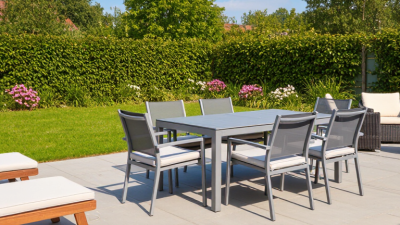
Aluminum dining set Table with four to six chairs About 8 × 10 ft (2.4 × 3.0 m), including chair clearance Powder-coated aluminum; optional outdoor fabric cushions Lightweight aluminum resists rust and suits humid or coastal settings; rinse off salt and secure furniture in strong wind. $500–$2,000 Everyday outdoor meals with relatively easy maintenance
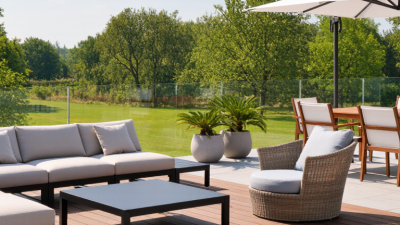
Resin-wicker conversation set Sofa, two chairs, and a coffee table About 9 × 10 ft (2.7 × 3.0 m) Woven synthetic resin over an aluminum or steel frame; removable cushions Synthetic resin handles ordinary rain better than natural wicker. Keep cushions dry and cover or store the set during harsh weather. $700–$3,000 Relaxed seating on medium patios and covered decks
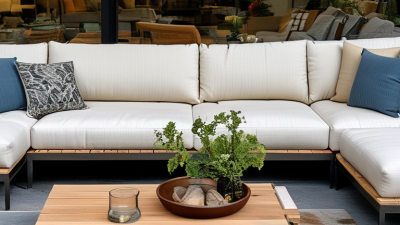
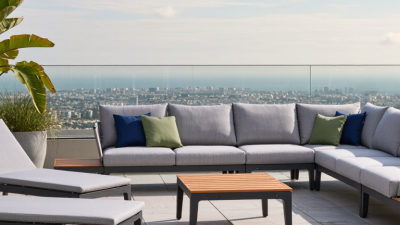
Modular sectional set Three to five interchangeable seating modules, often with a table About 10 × 12 ft (3.0 × 3.7 m), depending on layout Aluminum or steel frames, synthetic weave, and outdoor-rated cushions Flexible for changing layouts. Choose quick-drying cushions for damp areas; store cushions and protect the frame in winter. $1,200–$5,000 Large patios, entertaining, and adaptable seating needs
Acacia-wood dining or lounge set Usually a table with four chairs, or a small lounge grouping About 8 × 10 ft (2.4 × 3.0 m) for dining Acacia hardwood, often with metal fittings and fabric cushions Wood needs periodic cleaning and protective oil or sealant as recommended by the maker. Cover or store it to reduce prolonged wet exposure. $400–$2,000 Buyers who prefer a natural wood appearance and accept regular upkeep
Teak dining set Table with four to six chairs About 8 × 10 ft (2.4 × 3.0 m) Solid teak, with optional outdoor fabric cushions Teak is naturally durable outdoors and can weather to a silver-gray color. Cleaning is still needed; oiling is optional and changes the appearance. $2,000–$8,000+ Long-term use, premium budgets, and buyers who value durable hardwood
Recycled-plastic Adirondack set Two to four lounge chairs, sometimes with a side table About 6 × 8 ft (1.8 × 2.4 m) Recycled high-density polyethylene (HDPE), often with stainless-steel hardware HDPE does not absorb water like wood and is easy to wash. It is heavy and can become warm in direct sun; check care guidance for the color and finish. $500–$2,500 Low-maintenance lounging and exposed outdoor areas
Steel-frame budget dining set Table with four chairs About 8 × 9 ft (2.4 × 2.7 m) Painted or powder-coated steel, often with mesh or textilene seats Usually affordable and sturdy, but coating damage can expose steel to rust. Dry after long periods of rain and inspect joints and finish. $150–$800 Entry-level budgets and seasonal use

Planning note: Footprints are approximate planning estimates, not manufacturer specifications. Allow additional clearance for walking and for chairs to slide back; about 30–36 in (76–91 cm) behind dining chairs is a useful rule of thumb where space permits. Always follow the furniture maker’s care and weight-limit guidance.

No products in the cart.