
7 Stainless Shower Door Buying Tips for Global Buyers

A Stainless Shower Door may look simple in a showroom, but daily performance depends on details buyers can easily miss. A brushed frame, clear glass, and smooth handle matter; so do steel grade, hardware construction, seals, and accurate measurements. Small choices have consequences. A door that looks sturdy in a photograph may feel different after months of steam, water, and repeated use.

Stainless-steel shower hardware specialist Lena Morris puts it this way: “Choose for the bathroom’s daily conditions, not just the showroom finish.” Use that principle to compare corrosion resistance, finish consistency, glass thickness, hinge capacity, and available replacement parts. Grade 304 suits many indoor bathrooms; grade 316 may be worth considering where exposure is harsher. Confirm the manufacturer’s specifications rather than relying on a product label alone. Details matter.

These seven buying tips help global buyers assess suppliers, product quality, customization, packaging, shipping, installation guidance, and after-sales support. Request drawings and clear product specifications before approving an order. Check how dimensions are measured, and ask what the quoted price includes. Shipping can complicate even a good purchase. A damaged edge or missing seal may delay installation and add costs. Some product pages still leave important questions unanswered; buyers should treat that as a reason to ask, not guess. Compare evidence, clarify assumptions, and choose a door suited to the space and the people who will use it.
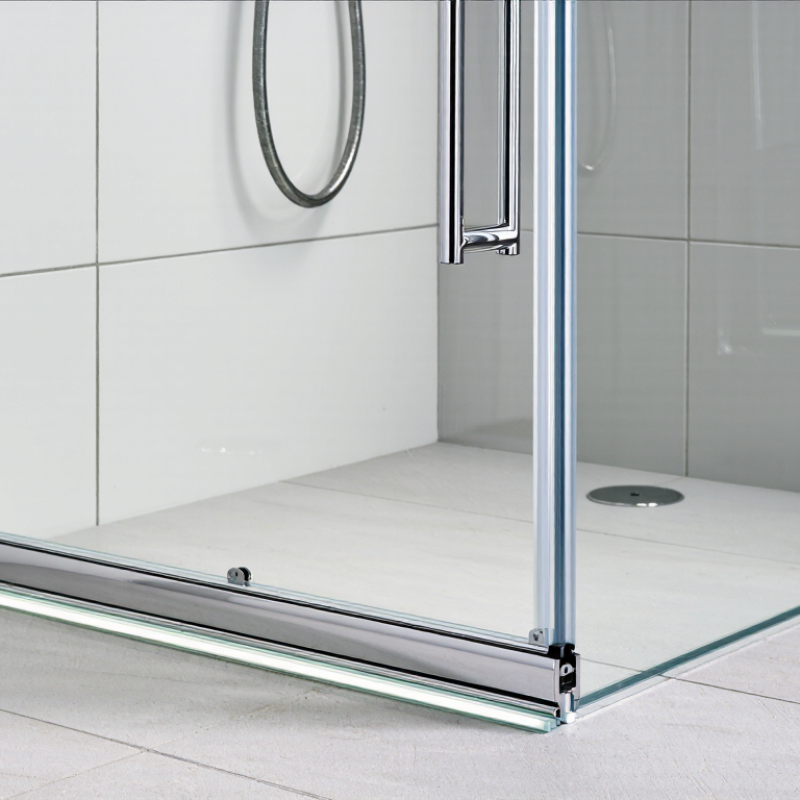
7 Stainless Shower Door Buying Tips for Global Buyers

Identify the Right Stainless Shower Door Type for Your Project

Start with the bathroom layout, not the handle style. Measure the finished wall-to-wall width, curb depth, and ceiling height; tile can change the final dimensions. A hinged door suits an open floor plan but needs clear swing space outside the enclosure. Small rooms need clearance. A sliding door avoids that arc, though overlapping panels leave a narrower entry. For corner showers, a pivot or neo-angle layout may use space better, but hardware alignment becomes more demanding.

Framed, semi-frameless, and frameless designs differ in support and upkeep. A framed unit has more metal edges to wipe, while a frameless door relies on sturdy hinges and accurately set glass. Check whether stainless steel is used for the frame, hinges, or only visible fittings; these are different specifications. Ask for the steel grade, finish, glass thickness, and compatible fasteners in writing, especially for humid or coastal sites. Fit comes first. One common oversight is service access: rollers and seals eventually need replacement. Choosing a system that is easy to maintain may matter more than choosing hardware that is barely visible.

Check Steel Grade, Finish, and Corrosion Resistance

For a stainless shower door, request the exact steel grade, not just the word “stainless.” Grade 304 suits many indoor bathrooms; grade 316 offers better resistance to chloride-driven pitting because it contains molybdenum. Neither grade is rust-proof under every condition. Ask for a material test certificate and confirm the grade applies to hinges, screws, and brackets too. Small hardware can fail before the glass does.

Finish matters. A smooth, well-finished surface is easier to wipe dry, while scratches and tight crevices can trap water and cleaning residue. One point gets overlooked. A bright showroom sample says little about the steel underneath. NACE International’s IMPACT study estimated corrosion costs at $2.5 trillion globally, or 3.4% of world GDP, based on 2013 data; that figure covers many industries, not shower doors. Still, it shows why corrosion resistance deserves scrutiny. For coastal sites or bathrooms with frequent chemical cleaning, compare grade, finish, and care instructions together. Ask suppliers how edges are finished and whether their corrosion claims come from documented testing. I would not treat a “marine grade” label as proof by itself.

Stainless Steel Grades for Shower Doors: Chromium & Nickel Ranges

Typical ASTM A240/A240M composition ranges show 316 stainless steel contains molybdenum (typically 2–3%), which can improve resistance to chloride-related corrosion compared with 304. Grade alone does not guarantee performance: also check the product specification, surface finish, fabrication quality, and care instructions.

Measure the Opening and Confirm Installation Requirements

A reliable shower door starts with accurate measurements, not the nominal size of the shower base. Measure the opening at the top, middle, and bottom; tiled walls can vary noticeably. Record the narrowest width, then measure height at both sides. Check whether the walls are plumb and the curb is level. Small differences matter. A few millimeters can affect the fit or leave an uneven gap.

Tips: Measure after tile and other finished surfaces are installed. Note the curb depth, nearby handles, and any fixture that could block the door swing. Take each measurement twice, and write down the units. It is easy to mix them up.

Before ordering, compare your measurements with the door’s stated adjustment range and installation instructions. Confirm where hinges or brackets can be anchored, and whether the wall contains suitable support behind the finish. Check the required clearance for opening and cleaning. If the opening is unusually uneven, pause and ask an experienced installer to assess it. I have seen careful measurements miss a bowed wall; a straightedge can reveal what a tape measure alone may not.

Evaluate Glass, Hardware, Safety, and Local Standards

For global buyers, a stainless shower door is only as dependable as its glass, fittings, and installation conditions. Specify safety glass suitable for the intended enclosure, and confirm its thickness with the door system’s design requirements. Tempered glass is common, but local rules may also govern markings, testing, and installation. A clear supplier document can help verify what is actually being shipped.

Tip: Check hinge and handle material, not just the finish. Ask how the hardware resists moisture and cleaning chemicals. Small details matter.

Inspect samples for smooth edges, even finish, and secure-fitting seals. Hinges should support the stated door weight without binding, while the bottom seal should limit splashes without trapping water. I would not assume that “stainless” means identical corrosion performance; grade and fabrication matter. That is easy to overlook.

Before ordering, compare the product documents with the destination market’s safety and building requirements. Confirm opening direction, wall conditions, and available clearance using site measurements. Keep the installation instructions with the shipment. A beautiful door can still fail if the wall is out of plumb or the hardware is mismatched. Allow time for a local installer to review the details; specifications can look simpler on paper than they are on site.

Compare Suppliers, Shipping Terms, Warranty, and After-Sales Support

A stainless shower door can look simple in a product photo, yet small differences in steel grade, finish, and hardware affect its performance. Ask each supplier for the steel specification, coating details, and test reports for corrosion resistance. Request drawings that show glass thickness, hinge positions, and opening direction. Compare quotations line by line, including handles, seals, and installation fittings. Photos help, but they cannot verify every detail.

Shipping terms deserve close attention. Confirm who arranges transport, insurance, customs paperwork, and delivery to your warehouse. Ask for the packed dimensions and weight, not just the door’s size. For glass shipments, check how corners and panels are protected, and what evidence is needed if a crate arrives damaged. Small details matter. A low freight quote may exclude local handling charges, so check the full landed cost before ordering.

Read the warranty for coverage periods and exclusions on finishes, hinges, and seals. Clarify whether replacement parts are available and who pays for shipping them. After-sales support should include a named contact, clear response times, and installation guidance suited to your project. Try sending a technical question before placing a large order; the reply can reveal how support works in practice. Keep written records of agreed specifications and remedies. No checklist catches everything, but vague promises are worth questioning.

7 Stainless Shower Door Buying Tips for Global Buyers - Compare Suppliers, Shipping Terms, Warranty, and After-Sales Support

# Buying Tip What to Compare Evidence to Request Buyer Action
1 Check the glass specification and applicable safety requirements Glass type, thickness, edge finishing, hole and cut-out tolerances, and destination-market requirements. Tempered safety-glass requirements vary by market; examples include ANSI Z97.1 and U.S. CPSC 16 CFR Part 1201, or EN 12150-1 for thermally toughened soda-lime silicate glass. A product specification sheet, relevant test reports or conformity documents, and drawings showing dimensions and hardware positions. Confirm that the documents apply to the quoted product and intended market. Have opening measurements checked before production because tempered glass generally cannot be cut or drilled after tempering.
2 Verify stainless-steel grade and finish Grade of each relevant component, surface finish, corrosion resistance, and whether the quoted material applies to the complete hardware set or only selected parts. 316 stainless steel contains molybdenum and generally offers better resistance to chloride corrosion than 304; actual performance also depends on exposure, finish, and maintenance. Material declarations or mill test certificates where available, a component-by-component material list, finish samples, and any corrosion-test method and results claimed. Specify the required grade and finish in the purchase order. Compare like-for-like materials rather than relying on a general “stainless” description.
3 Compare suppliers on technical control, not price alone Drawing approval process, dimensional checks, glass and hardware traceability, inspection stages, customization capability, production lead time, and experience with export packaging. A sample inspection record, quality-control plan, approved production drawing, references or audit information where available, and a clearly stated lead-time schedule. Use the same specification and inspection criteria when requesting quotations. Agree how changes, defects, and pre-shipment inspections will be handled in writing.
4 Evaluate packaging and transport risk Protection for glass edges and corners, separation between panels, moisture protection, crate or carton construction, handling marks, and whether packaging suits the transport route and handling conditions. Packaging drawings or photos, packed dimensions and gross weight, pallet or crate details, and a written procedure for documenting transit damage. Confirm packaging requirements before production. At delivery, inspect promptly and record visible damage with photos and delivery documents, following the carrier’s claim deadlines.
5 Compare Incoterms and landed-cost responsibilities Named delivery place or port, who arranges carriage, export and import clearance, insurance, unloading, and the point where risk transfers. Under Incoterms® 2020, CIF requires the seller to arrange and pay freight and insurance to the named destination port, but risk transfers when goods are loaded on board at shipment. FCA is often suitable for container and multimodal shipments; DAP and DDP allocate destination responsibilities differently. A quotation stating the exact rule, named place or port, Incoterms® version, shipment mode, insurance details, and any excluded charges. Compare total landed cost, not just unit price. Check local import duties, taxes, customs procedures, and unloading costs with a qualified customs or logistics provider.
6 Read the warranty terms in detail Coverage period by component, start date, covered defects, exclusions, labor and freight responsibility, claim process, and whether the warranty is valid in the destination market. Warranty periods and coverage are supplier- and contract-specific. The written warranty document, definitions of defects, maintenance requirements, and the process and response time for submitting claims. Attach the agreed warranty terms to the purchase contract. Clarify remedies for defective glass, hardware, finish issues, missing parts, and transit damage separately.
7 Confirm installation information and after-sales support Availability of installation instructions, spare rollers and seals, replacement hardware, technical assistance, language support, response process, and expected parts availability. These commitments should be confirmed for the specific order. Installation manual, spare-parts list, exploded diagram, contact and escalation procedure, and written terms for replacement parts and service support. Before ordering, test the communication and claim process with practical questions. Keep approved drawings, serial or batch details, invoices, and installation records for future service requests.

Note: Standards, customs obligations, warranty coverage, and product suitability depend on the destination market and the specific contract. Confirm applicable requirements with the relevant authorities and qualified advisers.

No products in the cart.