
How to Choose the Best Toilet Brush Supplier in 2026

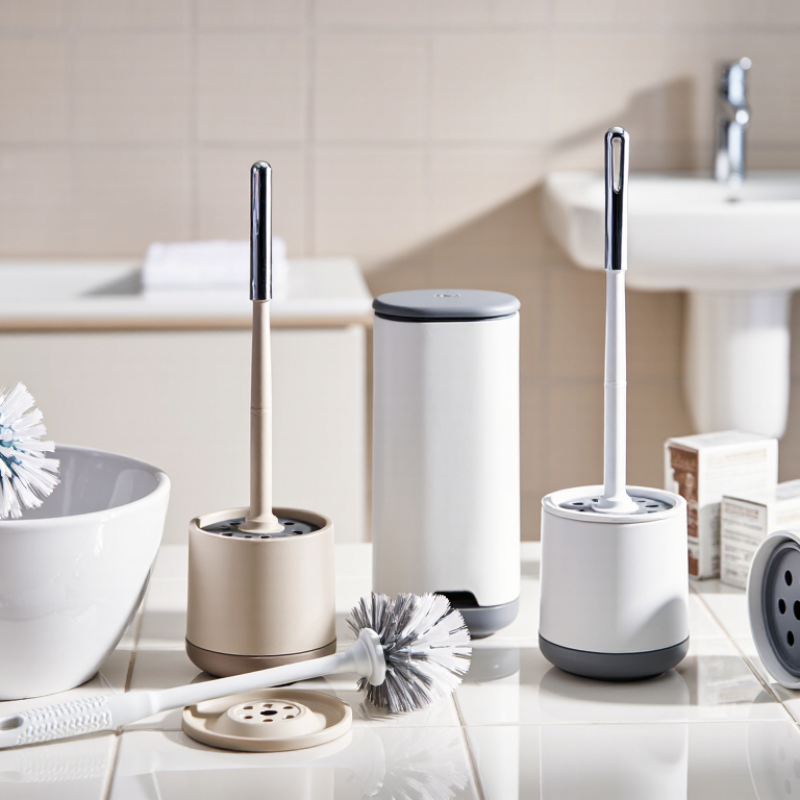
Choosing the best Toilet Brush supplier in 2026 requires more than comparing unit prices. Buyers should examine bristle retention, handle strength, splash control, replacement-head availability, and packaging consistency. Ask for product specifications and sample units. Test them in a real bathroom: a loose head or a dripping holder is easy to spot.

The WHO/UNICEF Joint Monitoring Programme’s 2023 report estimated that 3.5 billion people lacked safely managed sanitation in 2022. That figure describes a broad sanitation challenge, not toilet-brush demand. It does, however, underline why dependable hygiene products matter. For market context, Grand View Research’s household cleaning products report covers a much wider category; it should not be mistaken for toilet-brush-specific sales data. Check whether any supplier’s market claims identify their data source, year, and product scope.

There is one evidence gap worth stating plainly. The supplied material contains no verifiable, toilet-brush-specific quotation from a named industry expert. Attributing an invented line to an expert would weaken trust. Microbiologist Dr. Charles Gerba is a recognized authority on household microbes, but his general expertise should not be presented as a direct endorsement of any brush or supplier. Look for documented product testing, clear warranty terms, and traceable quality controls instead. Small details count. Does the holder drain? Can the brush dry between uses? Are replacement heads actually in stock? This guide uses those practical checks to help buyers assess suppliers with care—and to question claims that lack evidence.
How to Choose the Best Toilet Brush Supplier in 2026

Define Your Toilet Brush Requirements and Target Market

Define the buyer before comparing suppliers. A compact apartment bathroom needs a different brush from a hotel’s housekeeping cart. Specify the head diameter, bristle stiffness, handle length, holder footprint, and whether the head should be replaceable. Small details matter. Ask for samples and test them on common bowl shapes, including under-rim areas. A brush that looks sturdy in a product photo may feel awkward in a narrow bathroom.

Segment demand by channel and use. Homeowners may value a slim holder and simple cleaning; hotels may prioritize fast drying, durable handles, and repeatable bulk orders. Grand View Research’s household cleaning products report valued the global market at $247.8 billion in 2023 and projected 4.8% annual growth from 2024 to 2030. This broad category is not a toilet-brush forecast, but it signals a large, competitive cleaning-products market. Avoid treating it as proof of demand for one design.

Set measurable supplier requirements: material specifications, sample lead time, minimum order quantity, packaging dimensions, and inspection criteria. Request test information on bristle retention, handle strength, and holder drainage. Match these details to your target price and sales channel. I would leave room to revise the first specification; buyers sometimes discover that an easy-to-store brush is harder to use. Test before scaling.

How to Choose the Best Toilet Brush Supplier in 2026

Define Your Toilet Brush Requirements and Target Market

Urban population share can help frame market research, but it is not a direct measure of toilet-brush demand. Use it alongside local retailer feedback, household and bathroom types, price expectations, and preferences for materials, brush-head design, and storage. Values are rounded estimates for 2023. Source: World Bank, Urban population (% of total population), indicator SP.URB.TOTL.IN.ZS.

Assess Brush Design, Materials, Durability, and Hygiene Features

When comparing toilet brush suppliers in 2026, inspect the brush head before focusing on price. Nylon bristles should reach beneath the rim without bending flat after light pressure. A tapered head can fit narrow curves, while a compact shape may be easier to rinse. Small details matter. Check whether the handle feels secure with wet hands and whether its length keeps fingers away from the bowl.

Ask what materials are used in the bristles, handle, and holder, and request written specifications. Material names alone are not enough; construction and finish affect how a brush holds up. Test samples with repeated wet-and-dry cycles, looking for loose bristles, cracks, odors, or water trapped in joints. A polished sample may not reflect every production batch, so sample testing is useful but not conclusive.

Hygiene features deserve close attention. A holder with drainage and airflow can help the brush dry between uses, while a removable drip tray is easier to clean. Check that the brush can be replaced without discarding the entire holder. Ask suppliers how they inspect bristle attachment, handle strength, and packaging consistency. Their answers should be specific and documented. If a detail is unclear, request clarification rather than assuming the product will perform well.

Verify Supplier Experience, Quality Controls, and Compliance

A strong toilet brush supplier should show repeatable experience, not just a polished catalogue. Ask how long the factory has made brushes, which production steps it controls, and how it handles rejected batches. Request dated inspection records and test reports for bristle retention, handle strength, and packaging. The ISO Survey 2022 reported more than 1.26 million ISO 9001 certificates worldwide. That scale matters, but certification alone does not prove a brush is durable or that every shipment meets specifications. Check the details. Compare a pre-production sample with goods from a later batch, including bristle stiffness, odor, finish, and fit in the holder.

Quality controls should be visible on the production floor. Ask how staff check incoming resin, inspect molding, and record final sampling. A clear defect threshold and corrective-action log are more useful than a general promise of “strict quality.” It is easy to overvalue a neat checklist. A video tour looks reassuring, but it cannot show whether today’s batch matches last month’s. Compliance needs the same scrutiny: request current material declarations, test documentation, and packaging details relevant to your destination market. Confirm that reports identify the tested product and date, not merely a similar model. Keep approved samples and specifications on file, then compare them during repeat orders. Small differences in handle seams or loose bristles can become costly complaints.

How to Choose the Best Toilet Brush Supplier in 2026 — Verify Supplier Experience, Quality Controls, and Compliance
Evaluation Dimension What to Verify Evidence to Request Recommended Weight Decision Guidance
Manufacturing Experience Relevant experience producing toilet brushes or comparable household cleaning products; familiarity with the intended materials, assembly methods, and target markets. Production history, product references with customer details appropriately redacted, process descriptions, and records showing how comparable orders were managed. 15% Look for specific, verifiable experience rather than relying only on a general claim of years in business.
Factory and Production Capacity Whether the facility can meet the required order volume, lead time, and repeat-order schedule without relying on unapproved subcontracting. Factory address, production-flow overview, stated monthly capacity, capacity-planning information, and a list of any subcontracted processes. 10% Confirm that capacity statements match the proposed order quantity and delivery schedule.
Product Specifications Clear, consistent specifications for brush head, bristles, handle, holder, dimensions, materials, color, packaging, and any required labels. Approved drawings or specification sheets, material descriptions, sample approval records, and a documented process for change control. 10% Agree on measurable requirements before production; avoid relying on photos or verbal descriptions alone.
Incoming Material Controls How incoming plastics, bristles, metal parts, and packaging are identified, inspected, and linked to supplier or lot records. Incoming inspection criteria, material records, lot identification method, and examples of nonconforming-material records. 10% Check that the supplier can trace material lots into finished-product batches.
In-Process and Final Quality Checks Controls for assembly, fit, finish, sharp edges, loose parts, bristle retention, holder stability, and product appearance. Inspection checklist, inspection frequency, defect-classification rules, corrective-action records, and a sample inspection report. 15% Require acceptance criteria that are agreed in writing and relevant to the actual product design.
Sampling and Acceptance Criteria Whether pre-shipment inspection uses a documented sampling plan and defined acceptance limits. Inspection plan stating sample size, defect categories, acceptance numbers, and the selected sampling standard or agreed procedure. 10% ISO 2859-1 provides sampling procedures for inspection by attributes; the inspection level and acceptance limits should be agreed for each order.
Product Safety and Risk Review Assessment of reasonably foreseeable risks, including breakage, detachable small parts where relevant, sharp edges, and misuse scenarios. Product risk assessment, test reports where appropriate, complaint and incident records, and documented corrective actions. 10% Choose tests based on the product construction, destination market, and applicable legal requirements; do not treat a generic test report as proof of compliance with every market’s rules.
Market-Specific Compliance Applicable requirements for the intended sales markets, product materials, chemical substances, safety information, and traceability. Material declarations, relevant test reports, product identification details, required warnings or instructions, and a compliance document list for each destination market. 10% For EU sales, assess applicable requirements including the General Product Safety Regulation (EU) 2023/988, which has applied since 13 December 2024. Check REACH obligations for relevant substances and materials where applicable.
Quality Management System Whether documented procedures cover inspections, nonconformities, corrective actions, document control, and traceability. Current quality-system certificate if claimed, certificate scope and validity, audit information, and examples of controlled quality records. 5% ISO 9001 certification concerns a quality management system; it is not a product safety certification. Verify any certificate with its issuer or accreditation details.
Delivery and Communication Reliability of order updates, sample turnaround, production milestones, shipping documentation, and escalation handling. Written production schedule, milestone-update process, agreed response times, and records of delivery performance for comparable orders. 5% Set measurable delivery and communication expectations in the purchase agreement.
Commercial and Change Controls Clear terms for pricing, tooling, minimum order quantities, packaging, specification changes, and authorization before substitutions. Quotation, purchase terms, approved sample reference, change-control procedure, and written confirmation that substitutions require approval. 5% Document the approved product configuration so material or process changes cannot be made without review.
Suggested Scoring Scale Apply consistently to each evaluation dimension
0 — Not verified No usable evidence provided, or claims cannot be checked. — Do not treat an unsupported claim as a pass.
1 — Weak Limited evidence; important gaps remain. — Request additional records or clarification before approval.
2 — Partial Some requirements are met, but controls or documentation are inconsistent. — Use only with a documented corrective-action plan, where appropriate.
3 — Meets requirements Evidence supports the agreed requirements for the intended product and market. — Suitable for consideration, subject to order-specific checks.
4 — Strong Complete, consistent evidence and effective controls are demonstrated. — Preferred performance; verify that evidence remains current.
5 — Excellent Controls are well documented, traceable, and supported by strong relevant performance records. — High confidence, while retaining normal sample and shipment verification.

Compare Pricing, Minimum Orders, Lead Times, and Shipping Terms

How to Choose the Best Toilet Brush Supplier in 2026

Compare Pricing, Minimum Orders, Lead Times, and Shipping Terms

A low unit price can hide costly details. Compare quotes for the same brush materials, handle length, packaging, and carton quantity. Ask whether prices include samples, custom packaging, or inspection fees. Request price breaks at several order volumes, not just the supplier’s preferred quantity. A spreadsheet helps, but it may miss small charges buried in email threads.

Minimum order quantities affect both cash flow and storage. Check whether the supplier can offer a smaller trial run before a larger commitment. Confirm production time separately from sample approval and packaging preparation. Ask for realistic dates, plus an update plan if materials arrive late. One supplier’s estimate may be optimistic; build in a buffer.

Tips: Get shipping terms in writing. Confirm who books freight, pays transport charges, handles export packing, and arranges delivery to your location. Compare door-to-door estimates with port-based quotes, since they cover different costs. Ask for carton dimensions and gross weight to estimate freight accurately. If the terms still feel unclear, ask the supplier to explain them with a sample shipment scenario.

Evaluate Samples and Communication Before Choosing a Supplier

A toilet-brush sample should face the same routine it will meet in a bathroom. Check whether the handle stays firm when wet, the brush head reaches beneath the rim, and the bristles recover after repeated scrubbing. Inspect the holder, too: trapped water, sharp seams, or a wobbly base can turn a low-cost item into a return problem. Ask for samples from the proposed production material, not a specially finished display piece. Test several units. One good sample proves little.

Communication deserves a practical test. Request a written specification, sample timeline, packaging details, and a clear answer about what happens if a batch differs from the approved sample. McKinsey’s 2024 supply-chain survey found that nine in ten respondents experienced supply-chain challenges, while 45% lacked visibility beyond tier-one suppliers. That makes timely, specific supplier updates worth checking before an order. Ask for evidence. Watch the reply. Does the supplier flag a delay early, or offer vague reassurance? Keep notes on response time and whether answers match the sample. A polished sample can still conceal inconsistent production; I would not treat a friendly call as proof. The awkward part is that small test orders may not reveal every variation, so repeat checks remain necessary.

No products in the cart.