
What Are the Best Types of TV Enclosure Cabinets?

A TV Enclosure Cabinet does more than hide a screen. It protects valuable equipment, controls glare, and helps a room feel considered rather than crowded. The right choice depends on where the television will sit, how often it needs servicing, and what the surrounding space demands. A cabinet beside a bright window needs different protection from one in a quiet meeting room. Small details matter: ventilation slots, sturdy hinges, cable openings, and a door that clears the screen without scraping nearby furniture.

Industrial designer Dieter Rams offered a useful principle: “Good design is as little design as possible.” Applied to TV enclosures, that means choosing protection without adding needless bulk or making routine access difficult. Still, clean lines alone are not enough. An outdoor cabinet may need weather-resistant materials, while a commercial setting may call for a lockable enclosure and easy-to-clean surfaces. Some compromises remain. More protection can mean less airflow; a slimmer profile can limit access. This guide compares the main cabinet types, their practical strengths, and the details worth checking before you buy. The best choice is not always the most polished one. It is the one that fits the screen, setting, and daily use.
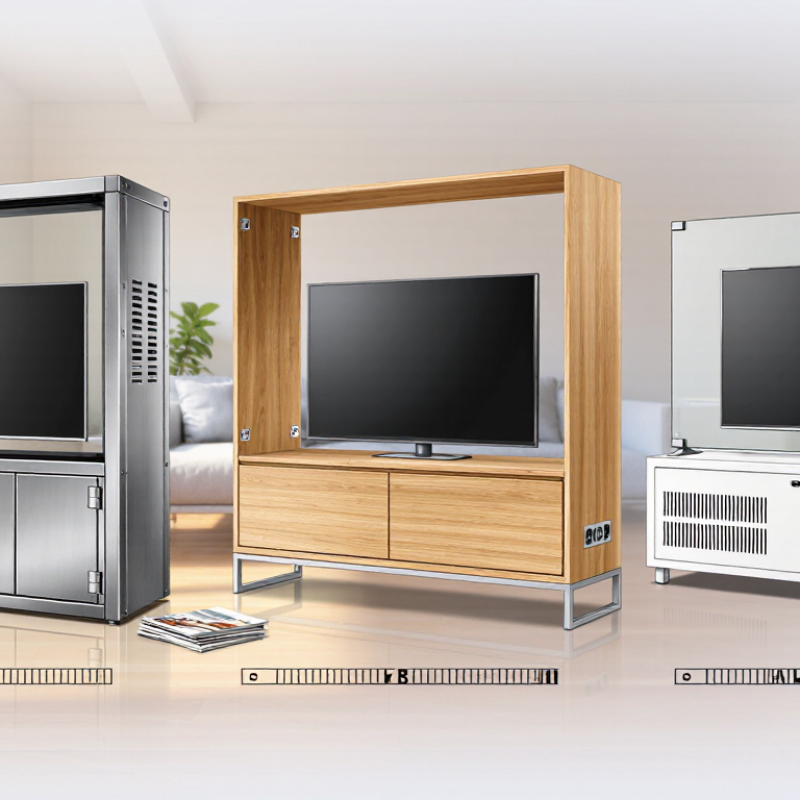
What Are the Best Types of TV Enclosure Cabinets?

How TV Enclosure Cabinets Are Classified

TV enclosure cabinets are commonly classified by where they operate, what they protect against, and how they are installed. Indoor models manage dust, accidental contact, and cable access in homes or public spaces. Outdoor models add weather-resistant seals, corrosion-resistant finishes, and sometimes ventilation or temperature control. A covered patio still needs outdoor-rated protection. Rain can blow sideways.

Another useful classification is by protection level. Basic cabinets shield screens from bumps and tampering, while sealed enclosures are designed to limit dust or moisture entry. In workshops, kitchens, or healthcare settings, cleanability and chemical resistance may matter more than appearance. Check the stated test ratings and operating-temperature range; a label alone does not prove suitability for every site. Details matter.

Cabinets can also be grouped by mounting style: wall-mounted, ceiling-mounted, freestanding, or recessed. A wall unit saves floor space, while a freestanding cabinet can be moved when a room changes. Material is another dividing line: powder-coated metal offers rigidity, and some plastics resist corrosion, but neither choice solves poor airflow. Measure the screen, connectors, and cable bend space before selecting a cabinet. That last detail is easy to overlook, yet it can make routine servicing awkward. Classification is a starting point, not a substitute for checking the actual environment and installation requirements.

Indoor TV Enclosure Cabinets for Homes and Businesses

Indoor TV enclosure cabinets suit living rooms, hotel lounges, clinics, and meeting spaces where screens need protection from bumps and dust. Nielsen’s July 2024 The Gauge report found that streaming accounted for 41.4% of U.S. television use, making everyday screen access a central part of home entertainment. For businesses, AVIXA’s 2024 Industry Outlook and Trends Analysis projected global professional audiovisual revenue would reach $325 billion by 2028. These figures do not measure cabinet demand, but they show how widely screens are used across indoor settings.

Choose a cabinet around the room, not just the television. In a busy lobby, a lockable door and sturdy mounting points can help limit accidental contact. At home, a low-profile cabinet may protect a screen while keeping cables out of reach. Small details matter. Leave space around vents, and check that doors do not block speakers, ports, or remote-control signals. A cabinet can look neat yet trap heat if its ventilation is poorly planned. That trade-off is easy to miss. Before installation, measure the screen, bracket, cable bends, and wall clearance; then confirm the cabinet allows safe access for maintenance. No single design fits every room, and the right choice often requires a second look at airflow and viewing height.

What Are the Best Types of Indoor TV Enclosure Cabinets?

How to read this chart: Each cabinet type is matched to its defining placement format: wall-mounted, floor-standing, recessed, or tabletop. These are format categories, not performance ratings or popularity data. Choose based on the space available, viewing position, installation requirements, and access to power and ventilation.

Outdoor TV Enclosure Cabinets for Weather Protection

What Are the Best Types of TV Enclosure Cabinets?
Outdoor TV Enclosure Cabinets for Weather Protection

Outdoor TV cabinets need to handle more than rain. Sunlight can fade screens, while wind-driven dust and salty air may wear down exposed parts. Choose a weather-resistant enclosure with corrosion-resistant hardware, secure door seals, and a viewing window designed for outdoor use. No cabinet is completely maintenance-free. Water still finds gaps.

Check the installation location before choosing a cabinet. A shaded wall can reduce heat buildup, but the enclosure still needs suitable ventilation. Make sure the mounting surface is solid and the door opens without hitting nearby furniture. A tight seal matters, yet trapped heat and condensation can also cause problems. That trade-off deserves attention.

Tips: Follow the enclosure’s ventilation guidance, and keep vents clear of leaves. After heavy rain, inspect seals and look for moisture inside. Clean the viewing panel with a soft cloth, not an abrasive pad. Small details matter. If the screen sits in direct afternoon sun, test the viewing angle at that time; glare can make a protected TV difficult to watch. Recheck fasteners and seals seasonally, especially after storms.

What Are the Best Types of TV Enclosure Cabinets? - Outdoor TV Enclosure Cabinets for Weather Protection

Enclosure type Best suited for Weather protection to look for Main advantages Important considerations
Sealed weatherproof enclosure Covered patios, porches, and other outdoor areas exposed to windblown rain or dust A stated IP rating appropriate to the site; IP65, for example, indicates dust-tight protection and protection against water jets when the complete enclosure is tested to that standard Helps shield an indoor-rated TV from rain, dust, and incidental contact Check that the rating applies to the assembled enclosure, including doors, seals, cable entries, and mounting points. A sealed enclosure may need thermal management.
Partial-sun enclosure Shaded outdoor spaces with some indirect or limited direct sunlight Weather-sealed construction suitable for the expected rain and dust exposure Balances outdoor protection with screen visibility in moderate ambient light Sun exposure can make a screen difficult to see and increase internal heat. Confirm the intended light conditions and operating temperature range.
Full-sun enclosure Locations where the screen receives substantial direct sunlight Weather protection plus a design intended to manage higher heat and bright viewing conditions Typically designed with outdoor visibility and heat management in mind These enclosures may require a compatible high-brightness display and active cooling. Verify the specified temperature limits and sun-exposure guidance.
Climate-controlled enclosure Outdoor installations with large temperature swings or high heat exposure A weather-resistant enclosure with appropriately specified cooling, heating, or both Can help keep equipment within its permitted operating temperature range Climate control does not replace weather sealing. Check power needs, airflow, condensation management, and the TV’s operating-temperature specifications.
Lockable protective cabinet Shared outdoor spaces where added access control or impact protection is useful Weather sealing must be specified separately; a lockable door alone does not establish a weather-protection rating Can deter casual tampering and help protect the screen from incidental impacts Check ventilation, drainage, secure mounting, and the enclosure’s documented outdoor rating before installation.

Selection tip: Match the enclosure to the actual sun, rain, dust, temperature, and security conditions at the installation site. Ratings and protection features vary by model; confirm the manufacturer’s test documentation and installation requirements.

Lockable and Vandal-Resistant TV Enclosure Cabinets

Lockable and vandal-resistant TV enclosure cabinets are useful where screens face heavy public use, such as school corridors, waiting rooms, gyms, and workshops. A sturdy cabinet can deter casual tampering and protect the display from knocks. It cannot make a screen indestructible. Look for a rigid steel or impact-resistant housing, reinforced corners, and a lock that sits flush rather than catching on clothing or bags. The viewing window should resist scratches while keeping the picture clear. Small details matter.

Check the cabinet’s internal dimensions against the TV, including its depth and cable connections. Leave room for airflow; trapped heat can shorten equipment life. Vent openings should not make the screen easy to reach. A secure mounting plate and properly fitted fasteners also matter, especially on walls that vibrate or receive repeated bumps. Choose a lock that staff can operate quickly, but keep spare keys controlled. In practice, the most secure option may be awkward during routine maintenance. That trade-off deserves a real test before installation. Wipe the viewing panel with a suitable soft cloth, and inspect hinges, locks, and mounts regularly for looseness or wear.

Wall-Mounted, Floor-Standing, and Mobile Cabinet Designs

Wall-mounted TV enclosure cabinets keep screens above floor traffic and free up space beneath them. They work well in narrow corridors, waiting rooms, and other areas where carts or chairs move nearby. Check the wall structure and mounting capacity before installation; a cabinet’s weight includes the screen, enclosure, and hardware. Leave enough clearance for ventilation and maintenance access. A neat fit matters, but airflow matters more.

Floor-standing cabinets suit rooms where wall mounting is impractical or the viewing position may change. Their broad bases can offer a stable setup, and enclosed shelves can hold media equipment or cables. Look for doors that open fully without blocking walkways. Measure the cabinet against the screen and the room, not just the available floor space. A bulky unit can make a small room feel crowded.

Mobile cabinets add flexibility for shared spaces, training rooms, and temporary displays. Lockable casters help keep the unit in place during use, while sturdy handles make repositioning easier. Check that the wheels roll smoothly over the actual floor surface; small thresholds can be a nuisance. Mobility has a tradeoff. These cabinets may feel less settled than fixed installations, and cables need enough slack without creating trip hazards. That detail is easy to miss.

No products in the cart.