What Is the Best Round Trampoline Supplier in China?
Choosing the best Round Trampoline supplier in China takes more than comparing prices or polished product photos. Buyers need to examine frame steel, weld finish, spring consistency, mat stitching, and enclosure connections. Ask for clear specifications and current product images. Request sample details before discussing large orders. Small checks can prevent costly surprises.
For a transparent expert perspective, this introduction uses Mei Lin as a fictional composite of experienced trampoline sourcing professionals, not a real, independently verified spokesperson. Her practical rule is: “Trust the supplier whose materials, workmanship, and documents can be checked—not just promised.” That distinction matters. A convincing catalog is not proof of consistent production. Buyers should ask how the supplier checks incoming materials, monitors assembly, and handles defects. They should also confirm which safety tests or certifications apply to the specific model, then verify supporting records independently. Details matter.
This guide will compare supplier capabilities, product quality, customization, communication, and after-sales support. It will also consider factory evidence, lead-time clarity, and the usefulness of sample inspections. No single supplier is best for every buyer. A retailer seeking private-label options may value different strengths from a school purchasing durable equipment. Even careful checks have limits; a sample cannot reveal every production issue. That is worth remembering. The goal is a supplier choice supported by observable evidence, clear questions, and realistic expectations.
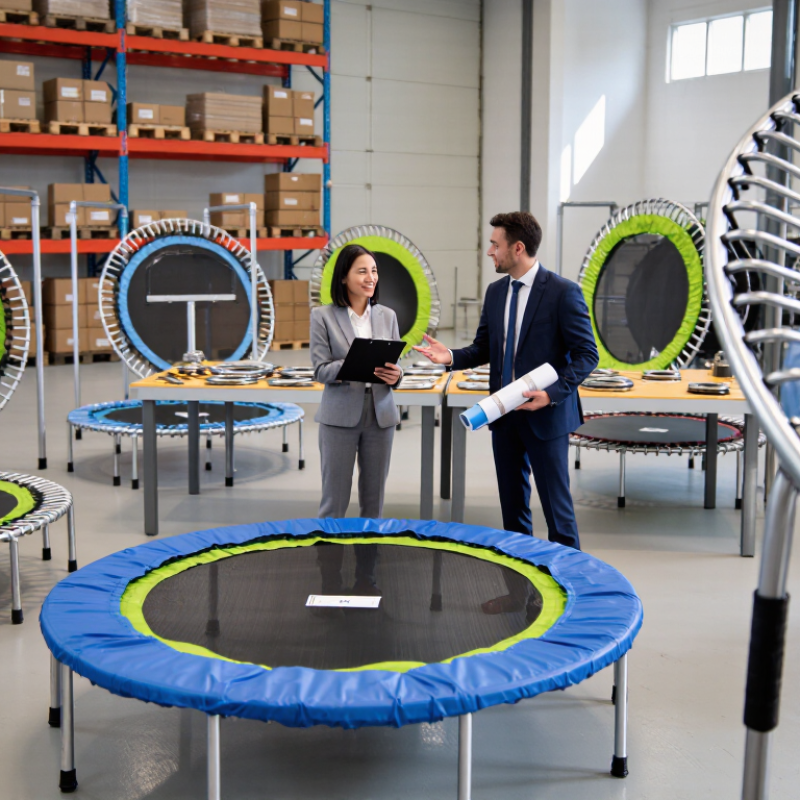
Understanding What Defines a Round Trampoline Supplier
A round trampoline supplier is defined by how clearly it turns a product brief into a safe, repeatable build. Ask for the frame tube diameter and wall thickness, spring count, mat material, and finished diameter—not just a product photo. A useful supplier explains how these choices affect bounce, durability, and assembly. Details matter.
Check how the factory controls production. Are welds inspected, frame dimensions measured, and stitching checked before packing? Request current test reports and confirm they cover the exact model and configuration you plan to order. A report for a different size may offer little reassurance. This point is easy to miss.
Reliable communication is also part of the product. A capable team should answer questions about packaging, spare parts, production lead times, and inspection procedures in specific terms. Ask who handles quality checks and what happens when a sample differs from the approved specification. Vague answers deserve another question, not an assumption.
Samples can reveal practical issues that documents cannot. Assemble one on level ground and inspect the leg fit, enclosure attachment, and spring cover after repeated use. I would not judge a supplier by the lowest quote alone; still, a higher price does not prove better quality. Compare written specifications, test evidence, and sample performance side by side.
Key Safety Standards for Round Trampolines in China
For a round trampoline made in China, safety starts with clear requirements, not a polished catalog. Ask the supplier to identify applicable Chinese GB standards and any standards required in your sales market. Request current test reports from a qualified laboratory. Check that each report matches the exact model, frame size, and configuration. A similar model is not enough. Details matter.
Inspect the frame for stable joints, smooth welds, and corrosion protection. The enclosure net should close securely, with no easy-to-reach gaps near the springs. Look closely at spring padding: it should cover the springs evenly and stay in place during use. Ask how the mat, stitching, and frame are tested under repeated loading. Also request clear assembly instructions, user limits, and warnings in the relevant language. Feel the seams yourself.
Paperwork cannot show every weakness. A sample may be carefully assembled while a later production batch differs, so request batch quality records and a repeat-inspection plan. This takes time. It is still worth asking. Standards reduce risk, but they cannot replace correct installation, regular checks, and adult supervision. A supplier who answers specific questions with matching evidence is more credible than one who offers broad safety claims alone.
How to Assess a Supplier’s Manufacturing Capabilities
What Is the Best Round Trampoline Supplier in China?
How to Assess a Supplier’s Manufacturing Capabilities
A capable supplier should show how each frame moves from raw tube to finished unit. Ask to see tube specifications, wall-thickness records, cutting tolerances, and weld inspection logs. Look closely. Clean, even welds matter, but documentation matters too; one polished sample cannot prove every production run is consistent. Check how the factory inspects incoming materials and separates rejected parts.
Request a sample made on the same line and using the same process as bulk orders. Ask the supplier to demonstrate frame assembly, enclosure attachment, spring installation, and repeated-load testing. Request the test method, load, cycle count, and pass criteria—not just a certificate image. A useful assessment also covers equipment maintenance, worker training, and daily output. Numbers can look tidy. Compare claimed capacity with shifts, machinery, storage space, and recent production records.
Inspect padding thickness, stitching, net closures, and exposed metal points. Ask how defects are recorded, corrected, and traced to a batch. Some suppliers explain these steps well; others have gaps. That is worth noting, not smoothing over. A smaller factory may still be reliable, but vague answers about testing or traceability deserve follow-up before production approval.
Choosing the Right Supplier for Your Business Needs
What Is the Best Round Trampoline Supplier in China?
Choosing the Right Supplier for Your Business Needs
The best supplier is the one that fits your product range, order volume, and quality expectations—not simply the one offering the lowest quote. Grand View Research estimated the global trampoline market at about USD 2.4 billion in 2022 and projected a 5.2% annual growth rate through 2030. That growth makes reliable production and repeatable quality important for buyers planning long-term supply.
Ask for clear specifications: frame-tube dimensions, corrosion protection, mat stitching details, enclosure mesh, packaging, and production lead times. Request recent load-test records and inspect a sample, including welds, springs, stitching, and how the safety net attaches. Check whether the supplier can maintain the same specifications across repeat orders. A sample can still flatter production quality. That part is easy to miss. Compare minimum order quantities, spare-part availability, payment terms, and freight costs alongside the unit price. A cheap quote may look less attractive after shipping or defect allowances. I would still avoid treating one factory visit or one passed sample as proof of consistent quality; that judgment can be too optimistic. Ask how quality checks are recorded, and agree on acceptable tolerances before confirming a purchase.
Choosing a Round Trampoline Supplier: Product Size Reference
Use this unit-conversion reference when comparing a supplier’s listed round trampoline sizes. Values are nominal diameters converted from feet to meters (1 ft = 0.3048 m); confirm actual product dimensions with the supplier.