
10 Best Preschool Sensory Furniture for Classrooms

A classroom can feel different at child height: a firm wobble stool, a low cushioned nook, or a smooth tactile panel beside the reading rug. Well-chosen Preschool Sensory Furniture may offer children practical ways to sit, move, pause, and explore. It is not a cure, and no single item suits every child.

The scale of developmental diversity matters. A 2019 Pediatrics analysis by Zablotsky and colleagues reported that 17.8% of U.S. children ages 3–17 had a developmental disability during 2015–2017. That broad figure does not measure sensory needs, but it underscores why classrooms benefit from flexible choices. The American Academy of Pediatrics’ 2012 clinical report also cautioned that evidence for sensory-based therapies was limited. Furniture should support participation, not promise clinical results.

Design still requires judgment. A soft seat can invite a quiet break; a crowded sensory corner can create more noise and distraction. Small details matter. Early-childhood education pioneer Maria Montessori offered a useful principle: “The environment must be rich in motives.” Her words are not a furniture specification, but they point toward purposeful spaces that invite safe, independent exploration. Some choices will miss the mark. Teachers should observe how children use each piece, check stability and cleaning needs, and adjust when a setup distracts rather than helps. The ten options ahead are starting points, not universal answers.
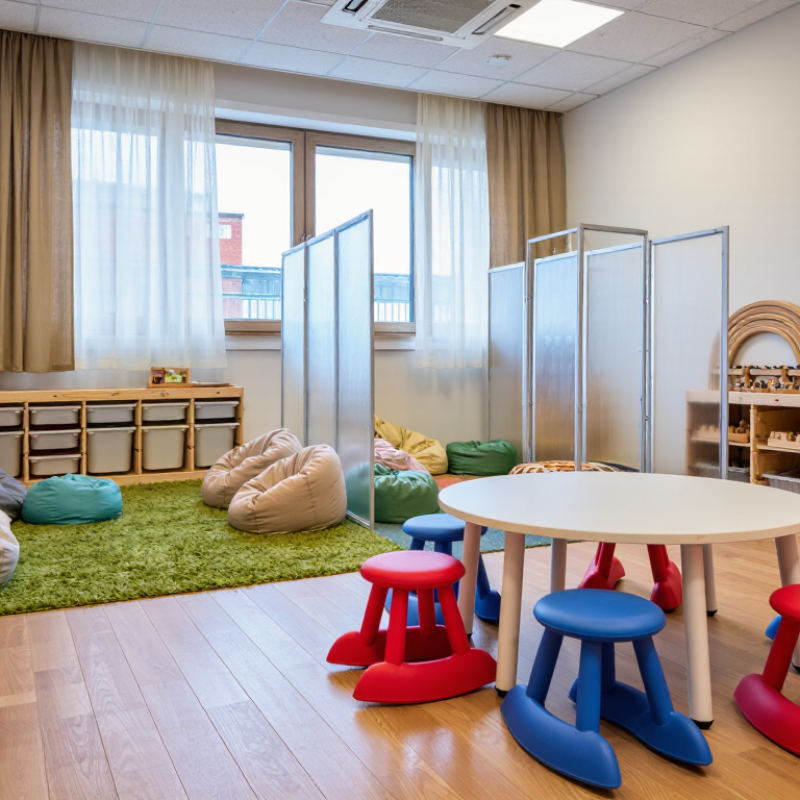
10 Best Preschool Sensory Furniture for Classrooms

Understanding Sensory Furniture in Preschool Classrooms

Understanding Sensory Furniture in Preschool Classrooms

Sensory furniture gives children practical ways to manage movement, posture, and stimulation during classroom routines. A low rocking seat may help one child settle for a story; a soft floor cushion may let another join circle time without sitting rigidly. These tools are not treatments, and one design will not suit every child. Fit matters. Furniture should be stable, easy to clean, and sized so children can use it safely and independently. Clear walkways also matter, especially around active seating.

The need for flexible classroom supports is real, but population data should be interpreted carefully. A CDC analysis published in Pediatrics found that about one in six U.S. children ages 3–17 had a developmental disability during 2009–2017 (Zablotsky et al., 2019). That figure does not measure sensory needs or prove that specialized furniture improves outcomes. It does underline the range of learners in ordinary classrooms. Watch, then adjust. Observe whether a child returns to an activity, appears more comfortable, or becomes distracted by the furniture. A quiet nook can help, but it is not magic. Teachers may need to reconsider placement, rules, or whether the item is useful at all.

How Sensory Furniture Supports Early Childhood Development

How Sensory Furniture Supports Early Childhood Development

Sensory furniture gives preschoolers practical ways to move, pause, and explore during the school day. A low balance beam invites careful steps; a soft floor cushion offers a calmer spot for listening. These choices can encourage body awareness, coordination, and self-regulation, but they do not guarantee developmental gains. Fit matters. A wobble seat that helps one child focus may distract another.

The World Health Organization’s 2019 guidelines recommend at least 180 minutes of varied physical activity daily for children aged three to four, including 60 minutes of moderate-to-vigorous activity. Classroom furniture cannot replace that activity, but safe movement options can add chances to practice. Teachers can watch how children use each piece, then adjust placement, supervision, or choice. A sensory corner should not become a place where children are routinely sent away from peers.

Tips: Offer a few options, not a room full of stimulation. Pair a movement seat with a quiet cushion, keep pathways clear, and ask children what feels helpful. Notice the exceptions, too. A child may need a different setup tomorrow.

Key Factors for Choosing Preschool Sensory Furniture

Choosing preschool sensory furniture starts with observing children, not browsing colors. Notice whether they seek movement, deep pressure, soft textures, or a quieter corner. The World Health Organization’s 2019 guidelines recommend at least 180 minutes of varied daily physical activity for children aged three to four, including 60 minutes at moderate-to-vigorous intensity. Furniture cannot meet that target by itself. But stable cushions, low platforms, and movable seats can support safe movement and varied postures. Fit matters.

Check scale before texture. Children should reach materials without leaning far and sit with feet supported. Look for stable bases, smooth seams, washable surfaces, and clear pathways. Offer choices, including a place to pause without rocking or touching textured materials. Not every child wants stimulation. The American Academy of Pediatrics’ 2012 clinical report on sensory integration therapies noted limited evidence for some sensory-based approaches. That is a useful caution: sensory furniture is not a treatment, and one setup will not suit every child.

Try a small selection during arrival, reading, and transitions. Observe whether children use each piece comfortably, avoid it, or turn it into an obstacle. Record what happens, then adjust placement or choice. The notes may be imperfect; real classrooms are busy. Still, they are more useful than assuming a popular item works for everyone. Check fasteners and wear regularly, and follow the furniture’s stated age and weight limits.

10 Best Sensory Furniture Options for Preschool Classrooms

10 Best Sensory Furniture Options for Preschool Classrooms

A useful sensory setup offers different ways to move, rest, and explore. Consider:

a child-sized rocking chair wobble stools floor cushions a soft beanbag a low sensory table a tactile wall panel foam climbing blocks a short balance beam a fabric play tunnel a quiet nook with a low bookshelf

Together, these options invite gentle movement and hands-on discovery. They do not need to fill the whole room.

Tips

Match furniture to children’s ages and abilities. Check that pieces stay stable during use, surfaces are easy to clean, and pathways remain clear. Keep climbing equipment low and supervise active play. Offer a calm seat away from busy areas, too. Small changes can help.

Observe how children actually use each item. A wobble stool may help one child focus, while another may prefer firm floor cushions. Rotate a few pieces and notice which ones get used, rather than adding everything at once. I’d also review the layout after a week; a cozy nook can become crowded faster than expected. These choices are starting points, not a one-size-fits-all plan.

How to Arrange and Maintain Sensory Furniture Safely

Arrange sensory furniture to support calm movement, clear sightlines, and easy supervision. Place low cushions, rocking seats, and textured panels away from doorways and busy walkways. Keep heavier pieces on level flooring, and leave enough space for children to enter and exit without squeezing past others. Check each item’s age guidance, weight limits, and setup instructions before use. A cozy corner can become crowded quickly; observe how children actually use it, then adjust the layout.

Tips: Anchor or stabilize items as instructed. Keep small loose parts out of reach of children who mouth objects. Inspect seams, fasteners, and surfaces each day. Wipe washable materials with products suitable for the surface, then let them dry fully. Simple steps matter.

Remove furniture with torn covers, exposed filling, sharp edges, or loose parts until it can be repaired or replaced. Follow care instructions rather than guessing; some finishes can be damaged by strong cleaners. Record recurring problems, such as a cushion slipping on the floor, and change the setup instead of relying only on reminders. Staff should agree on basic use rules and explain them in calm, child-friendly language. Perfect arrangements are unlikely. Recheck the space as children’s needs and classroom routines change.

No products in the cart.