What Are the 2026 Top Hotel Bed Sheet Set Types for Buyers?
Choosing the right Hotel Bed Sheet Set in 2026 will require more than comparing thread counts.
Buyers must examine fiber content, weave, durability, laundering needs, and guest comfort. Cotton percale may suit hotels seeking a crisp, cool surface. Cotton sateen offers a smoother hand and gentle sheen. Blended fabrics can reduce replacement costs, although they may feel less natural. Tencel and recycled fibers are also gaining attention, but their performance depends on finishing quality and supplier consistency.
Small details matter.
A rough seam can disturb sleep. A weak elastic edge can expose the mattress. White sheets reveal stains quickly, yet they also support a clean, recognizable hotel image. Hotelier Horst Schulze expressed a useful service principle: “The customer is not an interruption of our work; he is the purpose of it.” That idea applies directly to bedding decisions. A technically efficient sheet set still fails if guests find it hot, scratchy, or difficult to sleep on.
This guide examines the leading Hotel Bed Sheet Set types expected to interest buyers in 2026. It considers practical use across budget hotels, resorts, boutique properties, and high-occupancy operations. The discussion also questions popular assumptions. Higher thread counts do not automatically guarantee better quality. Eco-friendly labeling does not always prove superior durability. Supplier testing, sample washing, and staff feedback remain essential.
Some choices will be imperfect.
That is realistic. Hotel bedding must balance comfort, appearance, cost, replacement speed, and environmental responsibility. The best option is rarely the most expensive one. It is the set that performs reliably, wash after wash, in the actual property.
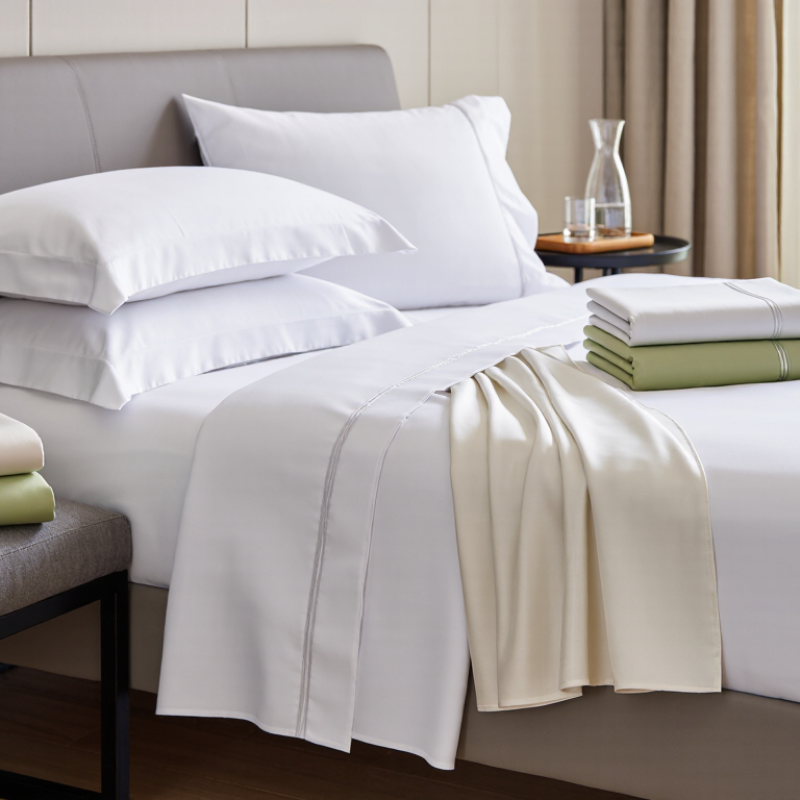
What Defines a Hotel Bed Sheet Set in 2026?
What defines a hotel bed sheet set in 2026? It is not simply a high thread count or a glossy product photograph.
A hotel-ready set must balance comfort, laundering speed, durability, and replacement cost. Standard sets usually include flat sheets, fitted sheets, and pillowcases. Some properties add duvet covers, but packaging varies by supplier. Buyers should confirm dimensions, shrinkage limits, seam strength, and color consistency before ordering.
Material choice now reflects operating conditions.
Percale offers a crisp, breathable hand feel for warm rooms. Sateen feels smoother and heavier, but it can retain more heat. Linen blends dry quickly and develop character, although their uneven texture may not suit every guest. Polyester-cotton blends often resist wrinkles and repeated washing. They are practical, not luxurious. A 2024 Textile Exchange report estimated global fiber production reached 124 million tonnes in 2023. That figure strengthens the case for recycled content, longer service life, and measurable sourcing claims.
Performance needs evidence.
The 2025 UN Tourism World Tourism Barometer reported international arrivals recovered to about 99% of 2019 levels in 2024. More occupied rooms mean more wash cycles and faster fabric wear. Hotel buyers should request wash-test results, GSM, pilling ratings, and colorfastness data. High thread count can mislead when yarn quality is poor. I have seen attractive sheets fail at the fitted corners. That detail matters. Sustainability claims also need checking, because recycled fibers do not automatically guarantee lower total impact.
Which Fabrics and Weaves Suit Different Hotel Needs?
What Are the 2026 Top Hotel Bed Sheet Set Types for Buyers?
Hotel buyers in 2026 should match fabric and weave to room use, climate, and laundry pressure. Cotton percale remains a strong choice for warm destinations. Its crisp surface dries quickly and feels cool against the skin. Cotton sateen feels smoother and warmer, making it suitable for upscale rooms and colder seasons. Blended polyester-cotton sheets can reduce shrinkage and improve daily durability. However, they may feel less breathable. Textile Exchange’s 2024 Materials Market Report states that polyester represented about 57% of global fiber production in 2023, while cotton represented about 22%. This supports practical blended options, but not every guest prefers them.
Weave affects performance more than many buyers expect. Percale usually offers a firm, breathable hand, while sateen provides softness and a slight sheen. For high-turnover properties, buyers should test 200–300 thread-count cotton or blended sets after repeated industrial washing. Thread count alone can mislead. Fiber quality, yarn construction, and finishing also matter. In my view, linen suits boutique hotels seeking texture and airflow, but its wrinkles demand stronger housekeeping routines. That trade-off is easy to underestimate.
Tips: Request wash-test samples before signing a contract. Record shrinkage, pilling, drying time, and seam damage. Check fitted-sheet depth against actual mattresses. A beautiful set can still fail during a busy weekend. Also review fiber claims against Textile Exchange data and supplier test records. Sustainability language needs evidence, not decoration.
What Are the 2026 Top Hotel Bed Sheet Set Types for Buyers?
Which fabrics and weaves suit different hotel needs?
The 1–5 scores are a practical procurement framework based on common textile characteristics. Percale cotton is a strong choice for breathable everyday use, sateen cotton provides a smoother premium feel, linen performs well in warm climates, polyester microfiber supports rapid drying and economical laundering, while lyocell offers softness and moisture management.
How Do Thread Count, Durability, and Comfort Compare?
What Are the 2026 Top Hotel Bed Sheet Set Types for Buyers?
Hotel buyers in 2026 are comparing comfort, thread count, and service life more carefully. High thread counts can feel smooth, but the number alone does not prove quality. ASTM D3775 measures fabric construction, yet it does not measure softness, strength, or sleeping comfort. A 600-thread-count sheet may feel dense and warm. A 300-thread-count percale sheet can feel cooler and crisper. That difference matters in rooms with warm climates or frequent guest turnover.
Durability begins with fiber quality and fabric structure. Long-staple cotton usually creates smoother yarns with fewer exposed ends. Percale often supports airflow, while sateen gives a silkier touch and heavier drape. Textile Exchange’s 2024 Materials Market Report states that cotton represented about one-fifth of global fiber production in 2023. This keeps cotton important for hospitality, although recycled and regenerated fibers are receiving greater attention. Buyers should inspect pilling, seam strength, shrinkage, and color retention after repeated washing. Laboratory results help, but actual laundry trials reveal more.
Comfort is harder to standardize. One guest may prefer crisp, cool fabric. Another may want a warmer, softer surface. A practical trial should wash each set at least 20 times, then compare hand feel, dimensions, and visible wear. Do not trust thread count marketing completely. I would also question very high counts. They can hide heavier construction and slower drying, increasing operational costs. The ideal set is not always the softest on day one. It must still feel comfortable after months of washing. That is where many purchasing decisions become less certain.
What Sizes, Features, and Certifications Should Buyers Check?
In 2026, hotel buyers can choose among percale, sateen, linen, and blended sheet sets. Percale feels crisp and breathable, making it practical for warm rooms and frequent washing. Sateen has a smoother surface and warmer hand, but it may show wrinkles and wear sooner. Linen offers strong airflow and a relaxed texture. It can feel rough at first. Cotton-polyester blends often reduce laundry costs and dry faster, although they may feel less natural.
Check the mattress dimensions carefully. A fitted sheet needs the correct length, width, and pocket depth, especially for mattresses with toppers. Common sizes include twin, full, queen, king, and California king, but hotel suppliers may use custom measurements. Measure the mattress, not just the room inventory record. That small step prevents loose corners. Flat sheets should allow enough side drop for repeated bed making. Pillowcase dimensions also deserve attention.
Look for colorfastness, shrinkage control, seam strength, and fabric weight. A high thread count alone does not prove durability; yarn quality and weaving matter more. Certifications can support safer purchasing. OEKO-TEX Standard 100 indicates testing for harmful substances, while GOTS addresses organic fibers and responsible processing requirements. Verify the certificate number, product scope, and current validity. A recycled-fiber claim should also identify its certified content. I once treated certification as a complete quality guarantee. That assumption was too simple. Laundry trials still matter. Test several sets through commercial washing, drying, folding, and guest-room use before placing a large order.