
Choosing the right Magnet Clipsheavy Duty product requires more than comparing advertised pull force. Global buyers need reliable holding strength, stable coatings, consistent dimensions, and clear performance data. A clip holding warehouse labels faces different demands from one securing cables, tools, or signage.
Professor J. M. D. Coey, a respected magnetism researcher, states, “Magnetism is a property of matter arising from the motion of electric charges.” That basic principle matters in practical purchasing. Magnet grade, steel thickness, air gaps, and surface contact can change performance dramatically. A clip may hold strongly on a clean steel shelf, yet slip across painted metal or a vibrating cabinet. Small details matter.
This 2026 guide examines heavy-duty magnet clips for buyers across different markets. It considers neodymium strength, protective finishes, temperature tolerance, corrosion resistance, clip design, and packaging quality. It also looks at supplier transparency, test methods, and repeatability between production batches. Those points often matter more than a dramatic product photograph.
Some specifications remain imperfect. Pull-force figures may not reflect real working conditions. A stronger magnet is not always the safer or better choice. Buyers should check shear loads, installation surfaces, and handling requirements before ordering large quantities. This guide aims to support careful decisions, not quick assumptions. Reliable sourcing begins with measurable evidence and honest questions.
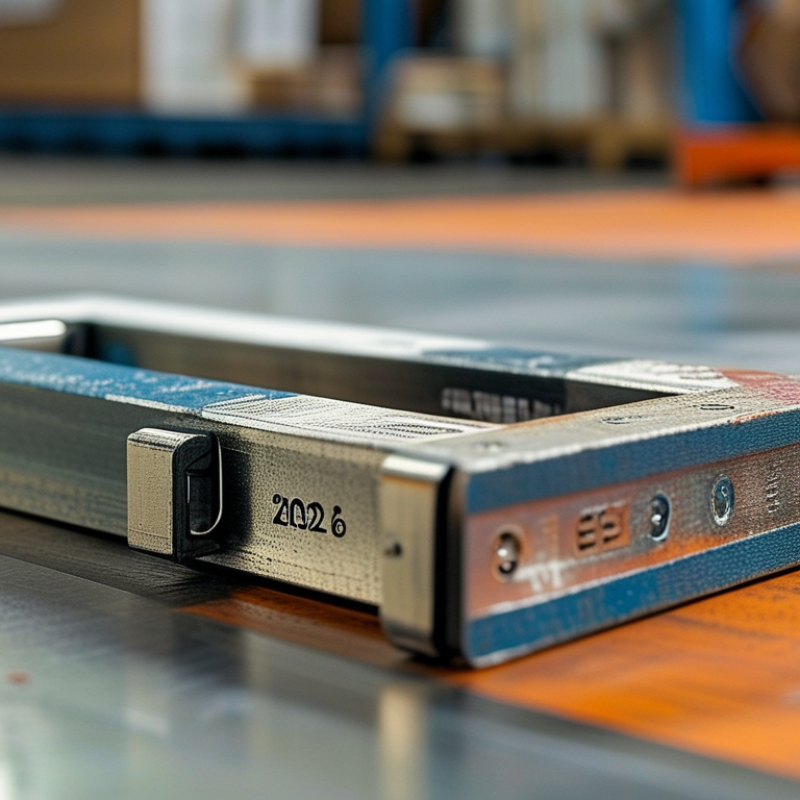
For global buyers, magnet grade is only one part of clip performance. N35 offers a 35 MGOe maximum energy product, while N52 reaches 52 MGOe under laboratory conditions. That difference can improve holding force, but it does not guarantee 49 percent more pull. Clip shape, steel contact, coating, and air gap often matter more. A one-millimeter gap can hurt noticeably.
Standard N grades typically have an 80°C maximum working temperature. Near a sunny warehouse roof, that margin can disappear quickly. Higher-temperature formulations cost more and may sacrifice some room-temperature strength. Ask for reversible temperature-loss curves, not only a grade label. This is where many purchasing comparisons become too neat.
Cost also reflects rare-earth supply, machining, plating, packaging, and inspection. The 2025 USGS Mineral Commodity Summaries estimated 2024 global rare-earth mine production at 390,000 metric tons of rare-earth oxide equivalent, including 270,000 tons from China. The IEA Global Critical Minerals Outlook 2024 reported that the top three refining countries controlled 97 percent of rare-earth refining in 2023. Supply concentration can shift quotations and delivery schedules.
For standard office clips, N35 may provide better value.
For compact, heavy-load designs, N48–N52 can reduce magnet volume.
Test the finished clip at its real gap and temperature. I would still question supplier curves; test fixtures can flatter results.
For 2026 global buyers, a heavy-duty magnet clip should be judged by working load, not its impressive pull-test number. A 2:1 safety factor divides verified holding force by two. If a clip holds 120 kilograms in a controlled test, its working load becomes 60 kilograms. The calculation is simple. The conditions are not.
ASME B30.20-2023 covers below-the-hook devices. It does not automatically certify every retail clip as lifting equipment. Surface finish, steel thickness, air gaps, temperature, and pull direction can reduce magnetic force. Painted doors and curved panels are especially risky. Buyers should request a test report from an ISO/IEC 17025-accredited laboratory, including substrate grade, thickness, test direction, and failure mode. The report should state whether the result is maximum pull, shear capacity, or a practical working load.
The U.S. Bureau of Labor Statistics recorded 885 fatal work injuries from falls in 2023. That statistic is not a magnet-clip test, but it makes margin discipline hard to dismiss. I would still add a field check. Load one sample gradually, inspect movement, and repeat after temperature exposure. A 2:1 rule is useful, but it is not magic. A clean laboratory number can feel safer than it is.
2026 Best Heavy Duty Magnet Clips for Global Buyers
Choosing a heavy duty magnet clip starts with the clip material, not the magnet size. Material affects grip, corrosion resistance, fatigue life, and safe working temperature. Global buyers should match these properties with the actual workplace.
Stainless steel clips suit kitchens, workshops, and humid storage areas. They resist rust better than ordinary steel and remain easy to clean. However, stainless steel can feel less springy in some designs. I once tested a thick clip that looked strong but opened too stiffly. Daily users disliked it. Surface finish also matters because rough edges can damage paper, cables, or coated panels.
Nylon clips are lightweight, electrically insulating, and comfortable to handle. They work well around painted surfaces and delicate documents. Their weakness is heat and long-term pressure. Under sunlight or warm equipment, nylon may soften or lose shape. This point is easy to overlook. 65Mn spring steel offers strong elasticity and repeated clamping performance. It is useful for warehouses, signage, tools, and heavier bundles. Yet it needs protective coating or controlled storage because moisture may encourage corrosion. Buyers should request hardness data, cycle testing, coating details, and magnet pull-force results. Test the complete clip, not only the magnet. A powerful magnet cannot repair a weak spring. Load direction, surface thickness, and air gaps can also reduce real holding strength. Procurement teams should leave a safety margin, because laboratory results rarely match dusty, uneven workplaces.
Representative tensile strength comparison of stainless steel, nylon, and 65Mn spring steel clip materials
65Mn spring steel provides the highest representative tensile strength and is suitable for heavy-duty clamping applications. Stainless steel offers a balanced combination of strength and corrosion resistance, while nylon is lightweight, electrically insulating, and resistant to many chemicals but has a lower tensile strength. Values are representative engineering figures and may vary with grade, heat treatment, moisture, temperature, and product design.
Reference basis: typical published property ranges for 304 stainless steel, engineering nylon 6, and heat-treated 65Mn spring steel.
For global buyers, ASTM B117 salt-spray data can guide coating selection for heavy-duty magnet clips. It cannot predict outdoor service life alone. The ASTM B117 practice commonly uses a 5% salt solution at 35°C, creating a controlled chloride environment. Testing should compare identical clip designs, magnet grades, and coating thicknesses. Otherwise, the numbers mislead.
A 1,000-hour result sounds impressive. It is not a warranty. Record red rust, blistering, and corrosion creep from a deliberate scribe. Creep under 2 mm may be acceptable for protected indoor equipment, but coastal installations need stricter limits. ISO 9227 also supports neutral salt-spray testing, while warning that laboratory exposure does not fully reproduce real weather. That limitation matters.
The NACE IMPACT study estimated global corrosion costs near US$2.5 trillion annually, equal to about 3.4% of global GDP. This supports careful coating investment, but not automatic over-specification. Zinc coatings may suit dry warehouse use, while epoxy-sealed systems or stainless substrates deserve consideration near saltwater. Nickel finishes can improve appearance, yet damaged edges still expose steel.
I would request test panels, coating thickness records, and post-test photographs. More data is helpful. Better data is comparable.
For 2026 heavy-duty magnet clips, compliance begins with the material stack, not the sales brochure. RoHS screening should cover the magnet alloy, steel clip, plating, coating, adhesive, and packaging. A supplier declaration alone is weak evidence. Request recent laboratory reports using recognized methods, with sample identification and test dates. The European Chemicals Agency requires communication when a Candidate List substance exceeds 0.1% by weight in an article. That threshold can affect coatings and plastic housings, even when the magnet itself passes.
REACH needs broader supplier control. Ask for the current substance declaration, change-notification terms, and traceable batch records. Check whether the report matches your exact clip model. A generic report may hide differences in nickel plating or adhesive formulas. ISO 9001 helps, but it does not certify RoHS or REACH compliance. The ISO Survey 2023 recorded 1,265,216 ISO 9001 certificates worldwide, showing its scale as a quality framework. Still, buyers should audit how suppliers control nonconforming parts, calibration, complaints, and document revisions.
Look closely.
During supplier reviews, I would sample clips from production cartons, not only polished samples. Verify pull-force records, coating thickness, corrosion testing, and magnet retention after repeated opening. The OECD’s Due Diligence Guidance supports risk-based, documented supply-chain checks, but paperwork can remain incomplete. That is the uncomfortable part. A compliant document can become outdated after one material substitution. Require written approval before changes, keep test evidence by lot, and recheck high-risk components before shipment.
| Clip Configuration | Typical Magnet Material | Typical Holding Force* | Recommended Clip Material | Corrosion-Protection Options | RoHS 3 Check | REACH Check | ISO 9001 Supplier Controls |
|---|---|---|---|---|---|---|---|
| Single-Jaw Heavy-Duty Clip | Neodymium-iron-boron, commonly N35–N52 grade | Approximately 8–15 kgf on clean, flat, 6 mm low-carbon steel | Hardened carbon steel or stainless steel, depending on environment | Nickel-copper-nickel plating for standard indoor use; epoxy or passivation for higher humidity | Required Verify material declarations and test reports against Directive 2011/65/EU and Commission Delegated Directive (EU) 2015/863. Check lead, mercury, cadmium, hexavalent chromium, PBB, PBDE, and four phthalates. | Verify Request an Article 33 SVHC declaration and confirm whether any Candidate List substance exceeds 0.1% w/w in an article. | Required Review a valid ISO 9001:2015 certificate, certificate scope, internal audit records, incoming-material inspection, calibration, nonconformance, and corrective-action procedures. |
| Double-Jaw Document Clip | Neodymium magnet with a steel circuit or flux-return plate | Approximately 12–20 kgf on clean, flat, 6 mm low-carbon steel | Cold-rolled steel with formed jaws; stainless steel for damp locations | Electroplated zinc or nickel; specify salt-spray performance only when supported by a test method and report | Required Check the bill of materials for the magnet, spring, coating, adhesive, and plastic components. Obtain a component-level compliance statement, not only a product declaration. | Verify Confirm SVHC screening covers plating chemicals, adhesives, polymer parts, and packaging supplied with the clip. | Required Confirm documented design review, approved-supplier list, lot traceability, final inspection records, and control of outsourced plating or magnetizing processes. |
| Rubber-Coated Magnetic Clip | Neodymium magnet enclosed in a protective elastomer or polymer shell | Approximately 6–14 kgf on clean, flat, 6 mm low-carbon steel | Spring steel or stainless steel with a non-marking elastomer cover | Rubber or thermoplastic cover to reduce scratching and improve slip resistance; verify UV and temperature limits | Required Request declarations for the polymer cover, pigments, plasticizers, adhesive, and magnet coating. Phthalates must be checked under the 2015/863 amendment. | Critical Ask for the exact Candidate List screening date because the REACH Candidate List can be updated. Obtain notification information where Article 33 obligations apply. | Verify Check documented production parameters for molding or overmolding, batch inspection criteria, defect sampling, process-change approval, and customer complaint handling. |
| Stainless-Steel Marine-Use Clip | Neodymium magnet with sealed housing or protected magnetic assembly | Approximately 5–12 kgf on clean, flat, 6 mm low-carbon steel | Preferably 304 or 316 stainless steel; confirm grade by material certificate when specified | Sealed construction, passivated stainless steel, epoxy barrier, or polymer encapsulation | Required Verify compliance for stainless steel, magnet coating, sealant, gasket, and any surface-treatment chemicals. Request laboratory evidence when risk or customer rules require it. | Critical Require a current REACH declaration covering corrosion inhibitors, sealants, coatings, and elastomers. Do not treat “stainless steel” alone as proof of REACH compliance. | Required Review environmental-condition validation, sealing inspection, supplier controls for stainless-steel grades, corrosion testing records, and traceability of waterproofing materials. |
| Wide-Base Signage Clip | Multiple neodymium magnets or a larger magnetic circuit | Approximately 15–25 kgf on clean, flat, 6 mm low-carbon steel | Reinforced steel body with a wide load-bearing jaw | Nickel plating, powder coating, or zinc plating selected according to indoor or outdoor exposure | Required Confirm the complete product BOM and obtain a RoHS declaration tied to the specific revision, material set, and manufacturing site. | Verify Obtain a current SVHC declaration, supplier material disclosures, and a process for reassessment after Candidate List updates or formulation changes. | Required Assess load-test records, sampling plans, gauge calibration, product-identification controls, change notification, and corrective-action effectiveness. |
| Adjustable Magnetic Clamp Clip | Neodymium magnet with adjustable steel or polymer clamp mechanism | Approximately 4–10 kgf, depending on the contact area and adjustment position | Steel, stainless steel, or engineering polymer with a metal reinforcement | Nickel plating, zinc plating, or molded protective housing; define wear and cycle requirements | Required Check every moving and contact component, including lubricants, springs, coatings, polymers, and adhesives, against the applicable restricted-substance limits. | Verify Request declarations for lubricants, polymer additives, adhesives, and plated parts, with evidence that supplier updates are monitored. | Required Verify documented functional testing, adjustment-force controls, life-cycle testing, inspection instructions, training records, and control of nonconforming assemblies. |
*Holding-force figures are indicative engineering ranges, not guaranteed ratings. Actual performance depends on magnet grade, air gap, steel thickness and permeability, contact-surface flatness, coating thickness, shear direction, temperature, and clip geometry. Require a defined test method and batch-specific test results before commercial approval. RoHS restricted-substance limits and REACH obligations should be checked against the regulations and Candidate List in force at the time of purchase.
