10 Best Wood Panels for Global Buyers
Choosing the right Wood Panels can shape a project’s strength, appearance, budget, and environmental performance. Global buyers face different climates, building codes, transport routes, and supplier capabilities. A panel that performs well in a dry warehouse may fail after arriving in a humid coastal city. That detail matters.
This guide examines ten practical panel options for international purchasing. It considers plywood, MDF, particle board, OSB, laminated panels, and other widely traded materials. Each option is reviewed through durability, surface quality, moisture resistance, machinability, weight, cost, and common applications. Real procurement experience shows that specifications alone are not enough. Buyers should inspect samples, confirm thickness tolerances, and request current test reports before placing large orders.
Small details matter.
Reliable sourcing also requires checking formaldehyde emissions, fire performance, structural ratings, and responsible forestry documentation. Requirements vary by destination, so certificates must be matched to local regulations and project use. Packaging deserves attention too. Sealed edges, corner protection, and moisture barriers can prevent costly damage during long-distance shipping. Supplier communication is equally important, especially when product names differ across markets.
No single panel is best for every project. Even experienced buyers can overlook storage conditions or installation methods. This comparison offers a useful starting point, not a substitute for technical review. By weighing verified performance against price and availability, global buyers can make more confident, defensible decisions. There may still be trade-offs. That is normal.
Types of Wood Panels Available to Global Buyers
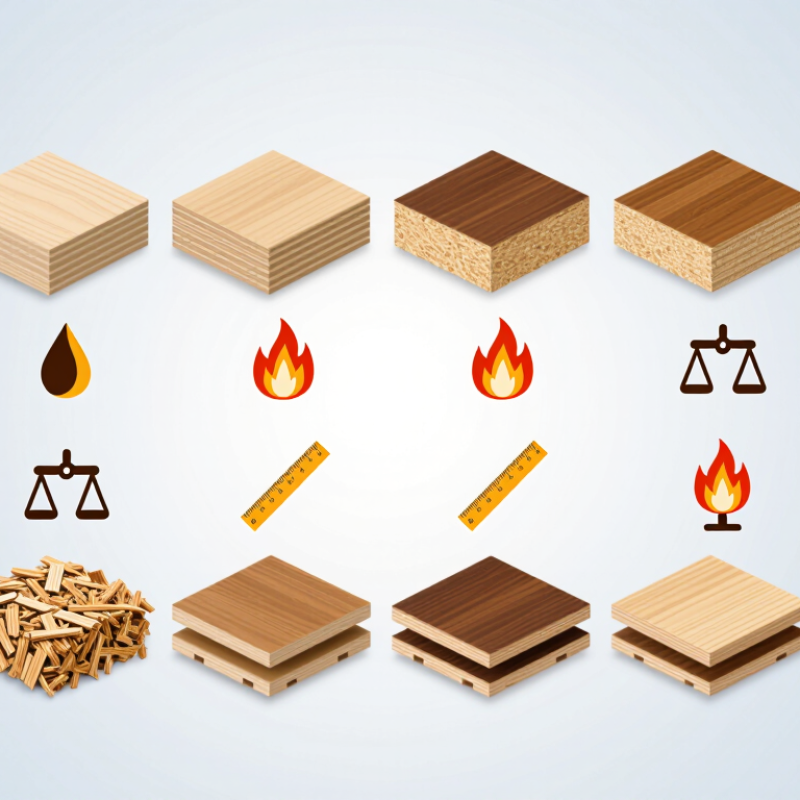
Global buyers can choose from several wood panel types, each suited to different loads, finishes, and climates. Plywood uses cross-laminated veneers for strength and dimensional stability. It performs well in cabinets, walls, and transport packaging. MDF has a smooth, uniform surface for painted furniture and detailed routing. It is not ideal for prolonged moisture exposure unless specially engineered.
Particleboard is cost-efficient and widely used in flat-pack furniture. Its performance depends heavily on density, resin quality, and edge sealing. OSB uses oriented wood strands in layered construction. It offers reliable structural performance in walls, roofs, and floors. The FAO Forestry Production and Trade database recorded global wood-based panel production above 370 million cubic metres in 2022, showing the scale of this international category.
Higher-performance projects may require LVL, laminated veneer lumber, or cross-laminated timber panels. LVL supports beams and long spans, while CLT forms thick, load-bearing building elements. Veneer panels provide a natural surface without using solid timber throughout. Buyers should check moisture resistance, formaldehyde emissions, thickness tolerance, and certifications under standards such as EN 13986. The UNECE and FAO Forest Products Annual Market Review highlights continuing demand for engineered wood in construction. Yet specifications can be misunderstood. A moisture-resistant label does not mean waterproof. Ask for recent test reports, inspect edge quality, and compare declared values with local conditions. Small details matter.
Key Properties That Define Wood Panel Performance
10 Best Wood Panels for Global Buyers
Key Properties That Define Wood Panel Performance
Global buyers should compare performance, not attractive surface grain alone. The ten strongest choices may include plywood, MDF, particleboard, OSB, blockboard, and engineered veneer panels. Each option balances strength, weight, moisture resistance, machinability, and price differently. A panel can look premium yet fail around a damp sink.
Moisture behavior is critical. The USDA Forest Products Laboratory’s Wood Handbook, FPL-GTR-282, reports indoor equilibrium moisture content commonly ranging from 6% to 14%. Panels must adapt to that movement without swelling, cracking, or losing bond strength. Plywood often performs well under changing loads. MDF provides a smooth machining surface, but standard grades need careful edge protection. OSB offers efficient structural performance when its grade matches the exposure.
Density and internal bonding also deserve close attention. High density improves screw holding, but it can increase weight and cutting resistance. Lightweight panels reduce shipping costs. They may need stronger fasteners or closer supports. Small details matter.
Emissions and consistency should be verified through independent documentation. Under EN 13986, the E1 chamber limit is 0.124 mg/m³ for formaldehyde emissions. Buyers should request test methods, thickness tolerances, moisture data, and batch records. Certificates alone are not enough. Adhesive chemistry, wood species, and production conditions can change results. The uncomfortable lesson is simple: the cheapest panel can become expensive after warping, rework, and rejected installation.
How to Compare Wood Panels for Different Applications
Choosing among the 10 best wood panels starts with the application, not the price.
Plywood suits cabinets, transport interiors, and areas needing layered strength. MDF offers a smooth face for painted doors and detailed machining. Particleboard can reduce costs in dry furniture settings, but edges need careful sealing. OSB performs well in walls, roofs, and floors where structural stiffness matters. LVL is more suitable for engineered beams and high-load components.
Moisture changes the decision. Check the panel’s intended service class, edge protection, thickness, and bonding system. A bathroom shelf needs different resistance from a bedroom cabinet. Ask for density, bending strength, screw-holding data, and formaldehyde test results. EN 13986 and ASTM-based reports can help buyers compare declared performance across markets. However, test conditions are not identical everywhere. That is easy to miss.
Sourcing also deserves scrutiny. The FAO Global Forest Resources Assessment 2020 recorded about 4.06 billion hectares of global forest, while nearly 420 million hectares were lost between 1990 and 2020. Responsible procurement should request chain-of-custody evidence and species information. The UNECE/FAO Forest Products Annual Market Review 2023–2024 also shows how energy costs, logistics, and construction cycles influence panel prices.
My practical mistake was comparing only board prices. The cheaper sheet required extra coating, stronger fixings, and more waste. Measure the finished job, not just the panel.
Sourcing Standards, Certifications, and Export Requirements
10 Best Wood Panels for Global Buyers
Sourcing Standards, Certifications, and Export Requirements
For global buyers, the “best” wood panel is not always the cheapest or densest. The ten practical options include plywood, OSB, MDF, particleboard, LVL, and decorative laminated panels. Each requires evidence of strength, emissions, moisture resistance, and legal timber origin.
The FAO Global Forest Resources Assessment 2020 recorded 4.06 billion hectares of forest worldwide. It also reported 420 million hectares lost between 1990 and 2020. These figures make traceability more than a paperwork exercise. Ask suppliers for chain-of-custody records, species details, harvest locations, and batch-level documentation. Recognized certification systems can support this process, but a certificate alone does not prove every panel is suitable.
Export checks should match the destination market. EN 13986 may apply to construction panels sold in Europe, while TSCA Title VI and CARB Phase 2 requirements commonly affect formaldehyde emissions in the United States. Request recent laboratory reports, not copied declarations. Test methods should identify panel thickness, bonding grade, emissions class, and production date. For humid routes, inspect packaging, edge sealing, and moisture readings before loading.
In practice, buyers often overlook pallets and container ventilation. That mistake can damage excellent panels. The UNECE/FAO Forest Products Annual Market Review shows how closely wood-product trade depends on changing regulations and market conditions. Requirements also change faster than product brochures. Recheck them before each shipment.
Selecting the Best Wood Panel Supplier for Your Market
Selecting the right wood panel supplier requires more than comparing prices. Market fit matters.
The FAO’s Global Forest Resources Assessment 2020 recorded 4.06 billion hectares of global forest cover. That figure supports responsible sourcing, but it does not prove it. Ask suppliers for current origin records, chain-of-custody documents, and independent audit results. Check whether their panels match local moisture, fire, and structural requirements. A kitchen panel for a humid coast should not equal one for a dry interior market.
Quality must be measurable. Request production samples, thickness tolerances, bonding details, and laboratory test reports. Formaldehyde emissions should be tested against the regulations in your destination market. Do not rely on a generic compliance letter. It may be outdated. The UNECE and FAO Forest Products Annual Market Review shows how closely panel demand follows construction activity, so supplier capacity can change quickly. Confirm monthly output, lead times, and backup production lines before signing.
Logistics deserves equal attention. UNCTAD’s Review of Maritime Transport 2023 states that ships carry over 80% of global trade by volume. Freight disruption can therefore reshape your landed cost. Compare packaging strength, container loading plans, port options, and damage claims history. A cheaper panel becomes expensive after swelling, rejected batches, or delayed installation. I would also test a small shipment first. It feels slower, but supplier promises are easier to assess with real panels in your warehouse.